Introduction
Picture this. You step outside on a bright June morning. The sun is warm. You grab a scarf out of habit. And by 10 AM, you’re sweating through your outfit.
Sound familiar?
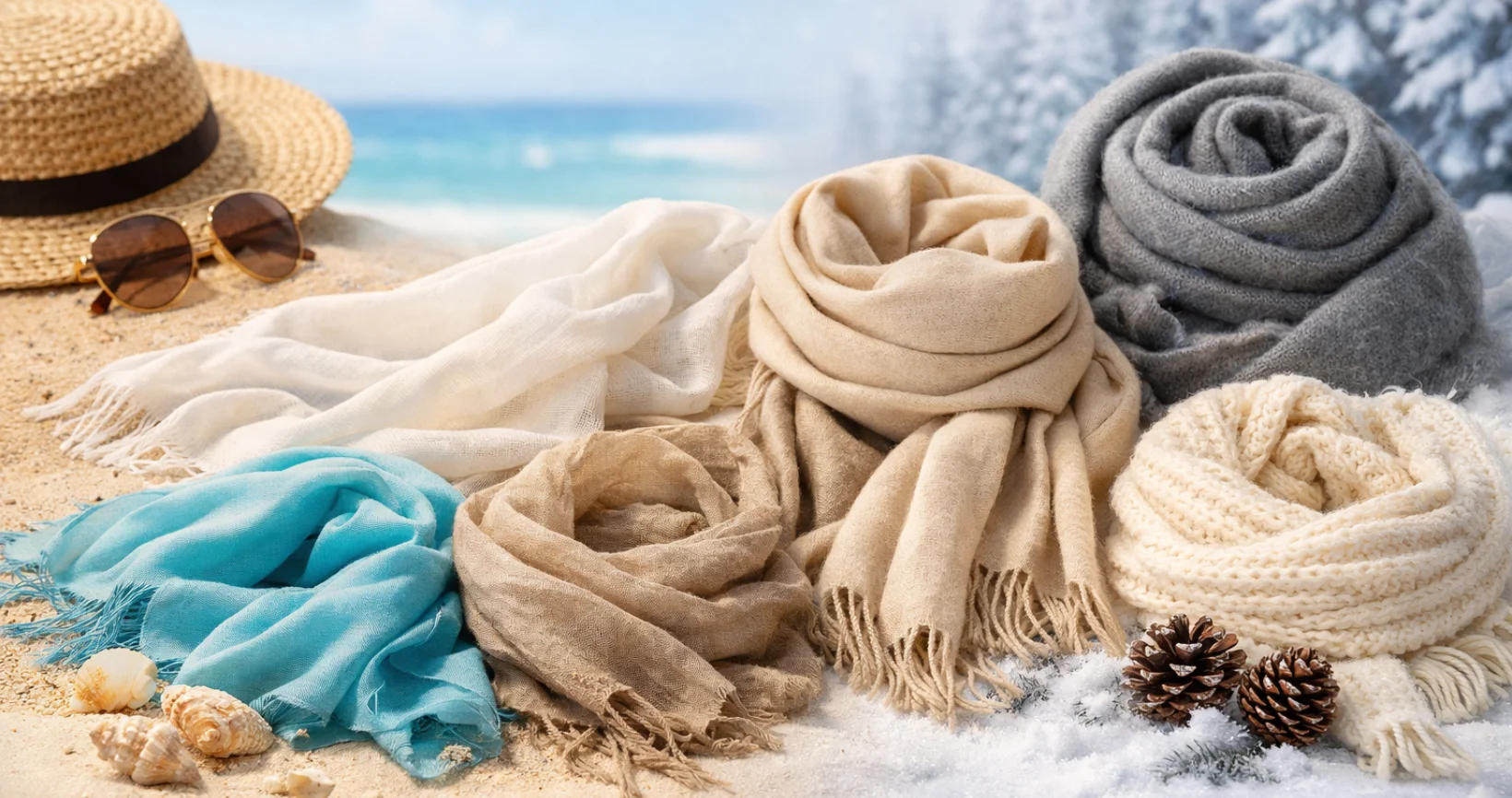
Most people think scarves are only for winter. But that’s not true. Scarves are one of the most versatile fashion accessories out there. They work all year round. The trick is knowing which scarf to pick for which season.
The best scarf for summer is nothing like a winter scarf. Different fabrics. Different weights. Different purposes. Get it wrong and you’re either roasting in July or shivering in December.
In this guide, we’ll walk through every fabric, every style, and every situation. By the end, you’ll know exactly which scarf to reach for, whether it’s 40 degrees outside or 4.
Why Choosing the Right Seasonal Scarf Actually Matters
Most people don’t think twice about this. They grab whatever scarf is nearby and head out the door. But here’s the thing. The wrong scarf fabric can ruin your entire day.
Wear a thick wool scarf in summer and you’ll feel like you’re wrapped in a heating blanket. Wear a thin cotton scarf in a cold snap and it does absolutely nothing to keep the wind out.
Think of it like shoes. You wouldn’t wear heavy boots to a beach. And you wouldn’t wear flip-flops in the snow. Scarves work the same way. The material matters as much as the style.
The right scarf does three things: keeps you comfortable, suits the weather, and looks great while doing it. That’s the goal. And it all starts with understanding scarf texture and the best scarf material for each season.
Best Scarf Materials for Summer
Summer scarves have one job above everything else: breathability. You want fabric that lets air move through it, pulls sweat away from your skin, and doesn’t stick to you like plastic wrap on a warm day.
Here are the four best fabrics for summer scarves.
1. Cotton Scarves: The Everyday Summer Hero
Cotton is probably the most popular summer scarf fabric. And for good reason. It’s soft against the skin. It absorbs sweat without feeling damp. And it’s easy to wash.
A cotton scarf for summer is kind of like your favorite white t-shirt. Simple, reliable, and comfortable in almost any situation. You can wear it on a morning walk, a beach trip, or a casual lunch with friends.
Best for: Everyday wear, outdoor activities, and casual summer styling.
Pro tip: Go for 100% cotton rather than blends. Blends with synthetic fibers can trap heat, which defeats the whole purpose.
2. Linen Scarves: The Hot Weather Champion
If you’ve ever been to a hot country in summer, you’ve probably seen locals in linen shirts. There’s a reason for that. Linen is a natural cooling fabric.
It has a loose weave that allows excellent airflow. It’s lightweight. And it actually gets softer the more you wash it. For a hot weather scarf, linen is one of the best choices you can make.
I once packed a linen scarf for a trip to Rajasthan in peak summer. The temperatures were brutal. But that scarf kept the sun off my neck without making me feel trapped in warmth. It was a small but genuine relief.
Best for: Hot climates, summer travel, and outdoor festivals.
3. Silk Scarves: Fashion Meets Function
Silk scarves are the glamorous option. They’re lightweight, smooth, and surprisingly breathable for a fabric that looks so luxurious.
Think of silk like a high-end air conditioner. It feels cool when you put it on. It doesn’t stick. And it drapes beautifully, which is why silk scarves are so popular in women’s summer fashion.
A printed silk scarf tied loosely around the neck is a classic summer look. Celebrities have been doing it for decades. And it works for a reason.
Best for: Smart-casual events, travel outfits, and women’s lightweight summer styling.
4. Lightweight Modal Scarves: The Underrated Option
Most people haven’t heard of modal. But if you’ve ever touched a modal fabric, you’ll understand why it’s growing in popularity. It’s incredibly soft. Almost silky in texture. And it’s made from natural beechwood fibers.
Modal has good airflow and a lightweight drape. It’s ideal as a women’s lightweight scarf for summer evenings when cotton might feel a little too plain.
Best for: Evening wear, transitional weather, and anyone who wants something a step above basic cotton.
Best Scarf Styles for Summer
Choosing the right fabric is step one. Wearing it well is step two.
Summer scarves are incredibly flexible. You can wear them as a loose neck drape, a headband, a beach wrap over your shoulders, or even tied to your bag as a fashion accessory.
Sun protection scarf: This is a practical one. Draping a lightweight scarf over your shoulders works like a sunscreen scarf. It blocks UV rays without sunscreen residue. Perfect for beach days or outdoor sightseeing.
Neck drape: Keep it loose. Let it fall naturally. This works especially well with silk or modal.
Head scarf: Tied around the hair or forehead for a retro summer look. Cotton and silk both work well here.
Best Scarf Materials for Winter
Now we flip the script. Winter scarves are about one thing above all else: warmth. You need insulation. You need fabric that traps heat close to your body and blocks the cold air from creeping in.
1. Wool Scarves: The Classic Winter Choice
Wool has been keeping humans warm for thousands of years. There’s a reason it’s still the gold standard for winter scarf material. It is one of the warmest scarf materials available.
Wool works like a thermostat for your body. It traps air between its fibers, creating a layer of insulation. And unlike some synthetic fabrics, it can absorb a little moisture without feeling wet.
The only downside? Some people find wool a bit scratchy against the skin. If that’s you, look for merino wool. It’s finer, softer, and just as warm.
Best for: Cold winters, outdoor activities, and anyone who needs serious warmth without the bulk.
2. Cashmere Scarves: Luxury Warmth
Cashmere is wool’s more sophisticated sibling. It comes from cashmere goats and is known for being exceptionally soft. Wrapping a cashmere scarf around your neck feels like a warm hug on a cold day.
What makes cashmere special is that it’s lightweight yet warm. You get the insulation of wool without the weight. It’s the premium choice for winter ladies’ scarves and is often given as a gift for good reason.
One thing to note: Cashmere requires more careful washing. But if you look after it, a good cashmere scarf can last years.
Best for: Formal occasions, gifting, and anyone who wants warmth without bulk.
3. Wool-Blend Scarves: The Practical Middle Ground
Pure wool and cashmere are great. But they can be pricey. Wool-blend scarves mix wool with other fibers like acrylic or polyester to bring the cost down while keeping most of the warmth.
They’re also usually easier to wash. Most wool blends can go in the washing machine, which is a huge plus for everyday use. A good winter muffler for ladies or a muffler for men is often made from a wool blend for exactly this reason.
Best for: Daily winter wear, budget-friendly warmth, and easy maintenance.
4. Polyester Winter Scarves: The Affordable Option
Polyester gets a bad reputation in fashion. But for scarves, it’s not a terrible choice. It’s durable, affordable, and it does retain warmth reasonably well.
If you’re buying a scarf for a specific outdoor event like a football match in January, a polyester scarf does the job without breaking your budget. It’s also resistant to shrinking and fading.
Best for: Budget purchases, occasional winter wear, and sports events.
Best Winter Scarf Styles
Winter scarves are bigger, thicker, and more functional than summer ones. But that doesn’t mean they can’t look stylish.
Muffler style: Wrap the scarf around the neck once and let both ends hang loose in front. This is the most common style. Works perfectly as the best muffler for men and as a winter muffler for ladies too.
Loop wrap: Fold the scarf in half, put it around your neck, and pull the loose ends through the loop. Warm, neat, and clean-looking.
Oversized wrap: Drape a large knitted scarf over both shoulders and chest for maximum warmth. This works well as an outer layer on very cold days.
Summer vs Winter Scarf: Quick Comparison
| Feature | Summer Scarves | Winter Scarves |
|---|---|---|
| Fabric | Cotton, silk, linen, modal | Wool, cashmere, wool blends |
| Weight | Lightweight | Thick and heavy |
| Primary Purpose | Breathability and sun protection | Warmth and insulation |
| Style Options | Neck drape, head scarf, wrap | Muffler, loop wrap, oversized |
| Best Travel Pick | Silk or cotton | Cashmere or wool blend |
| Washing | Machine wash most fabrics | Gentle wash or dry clean |
Lightweight Wraps and Shawls for Mild Weather
Not everything is black and white. Sometimes the weather is just… in between. That annoying transitional period in spring or autumn when it’s too warm for a winter scarf but too cool to go without anything.
That’s where lightweight wraps and shawls come in.
A light summer shawl is perfect for evenings when the temperature drops after sunset. A lightweight wrap can be thrown over a summer dress when you walk into an air-conditioned restaurant. These are the unsung heroes of the scarf world.
Modal and thin cotton both work beautifully for lightweight shawls. They add a layer without weight. And they look good without trying too hard.
Choosing the Right Scarf for Travel
Traveling with scarves is one of the smartest packing decisions you can make. A single scarf can work as a neck wrap, a light blanket on a cold plane, a beach cover-up, or a hair accessory. It earns its space in your bag.
For the best scarf for summer travel, go with silk or lightweight cotton. Both pack down small and don’t wrinkle badly. Silk especially bounces back after being folded.
For winter travel or destinations with unpredictable weather, a cashmere or wool-blend scarf is the smart pick. It’s warm enough for cold snaps but light enough to pack without taking up half your luggage.
Three things to consider when choosing a travel scarf:
- The climate of your destination
- How versatile the fabric is across different looks
- How easily it packs and unfolds without creasing
How to Style Scarves for Different Seasons
Summer Scarf Styling Tips
Styling a summer scarf is all about keeping it light and effortless. The goal isn’t warmth. It’s fashion and function in equal measure.
Loose neck drape: The easiest approach. Fold your scarf into a long strip and drape it around your neck without tying. Let both ends fall in front. Clean, casual, done.
Head scarf: Fold a silk scarf into a triangle, place the flat edge at your forehead, and tie the two ends at the back. This scarf style for girls is a classic that’s come back in a big way.
Bag tie: Tie a small silk scarf around the handle of your handbag. It adds color and texture without any effort.
Shoulder wrap: Drape a large linen or cotton scarf over both shoulders. Great for outdoor lunches or evening events.
Winter Scarf Styling Tips
When it’s cold, function leads. But that doesn’t mean you have to look like you wrapped your neck in a rug.
The loop wrap: Fold your scarf in half lengthways, drape it around your neck, and pull both loose ends through the folded loop. Snug, secure, and stylish. This is probably how to wear a winter scarf most effectively.
Muffler style: The most traditional method. Wrap once around the neck and let both ends hang down. Looks great with a coat.
Layered knit wrap: For very cold days, wrap a thick knitted scarf around twice. Tuck it into your jacket for full neck coverage.
Tips for Choosing a High-Quality Scarf
Not all scarves are created equal. You can spend very little and get a great scarf. Or you can spend a lot and end up with something that falls apart in a season. Here’s what to look for.
Fabric softness: A soft scarf material is a good sign. If it feels rough in the shop, it’ll feel rough against your skin all day. Always touch before buying.
Check the stitching: Hold the scarf up to the light. Are the threads even? Any loose ends or unraveling? Good stitching means the scarf will last.
Color versatility: Neutrals like beige, white, navy, and grey are the most versatile. They work with almost any outfit. Buy bold prints if they match your wardrobe, not just because they look good on the shelf.
Read the label: The fabric composition tells you everything. 100% silk, 100% cashmere, or 100% merino wool are all strong indicators of quality. Avoid scarves that don’t list any fabric details at all.
Fashion Trends in Seasonal Scarves
Fashion moves fast. But scarves are one of those accessories that keep cycling back. Here’s what’s popular right now in fashion scarves.
Oversized scarves: Big, chunky, and cozy. The oversized scarf trend has been strong for a few winters now. Think blanket scarves in earthy tones.
Printed silk scarves: Bold geometric or floral prints on silk are having a major moment. They work tied around the neck, the head, or the bag. Very retro, very chic.
Minimalist cotton wraps: On the opposite end, clean, solid-colored lightweight cotton wraps are popular for their understated elegance. Less is more.
Neutral knit scarves: Off-white, camel, and oatmeal knitted scarves are a staple of quiet luxury dressing. They elevate any winter outfit without shouting about it.
Frequently Asked Questions
Which fabric scarf is best for summer?
Cotton, linen, and silk are the best scarf fabrics for summer. Cotton absorbs sweat and breathes well. Linen keeps you cool in intense heat. Silk feels light and smooth. All three allow airflow without trapping heat against your skin.
Which scarf material is best for winter?
Wool and cashmere are the best winter scarf materials. Wool traps heat efficiently and handles harsh cold well. Cashmere offers the same warmth with a softer, lighter feel. Both insulate without bulk. Merino wool is a great mid-range option too.
Which type of scarf is best?
It depends on the season and purpose. A wool or cashmere scarf is best for winter warmth. A lightweight silk or cotton scarf works best for summer styling. For travel, a versatile silk scarf wins. Match the scarf type to your actual need.
Which fabric is most suitable for winter wear?
Wool is the most suitable fabric for winter overall. It traps warm air close to the body and handles moisture without feeling wet. Cashmere is softer and lighter. Wool blends offer durability at a lower price. All three outperform synthetic fabrics in genuine cold.
Do scarves actually keep you warm?
Yes, absolutely. A good scarf covers the neck, which loses body heat quickly. Blocking that area alone makes a noticeable difference in warmth. Wool and cashmere scarves trap warm air effectively. Even a lightweight scarf reduces wind chill significantly on cold days.
How to pick a good scarf?
Start with the season. Choose lightweight fabrics like cotton or silk for summer and wool or cashmere for winter. Check softness by touch. Look at the stitching quality. Pick neutral colors for versatility. Always read the fabric label before buying anything.
Which is better, silk or satin scarf?
Silk is better overall. It is a natural fiber that breathes, feels luxurious, and works in both warm and cool weather. Satin is a weave style, often made from synthetic fibers. It looks shiny but traps heat and lacks silk’s natural softness and breathability.
What is the most luxurious scarf material?
Genuine Kashmiri pashmina is the most luxurious scarf material in the world. Its ultra-fine fibers feel softer than almost any other natural fabric. Mulberry silk comes in as a close second. Both carry a premium price and a genuinely exceptional feel.
How to wear a scarf when cold?
The loop wrap works best. Fold the scarf in half lengthwise, drape it around your neck, and pull both loose ends through the folded loop. It sits snug without slipping. For extreme cold, wrap twice and tuck the ends into your jacket.
Which scarf color is best?
Neutral colors are the most versatile. Beige, camel, navy, grey, and off-white work with almost any outfit. Black is practical but can feel flat. For summer, soft pastels and prints add personality. Buy neutrals first, then add bolder colors once your wardrobe is set.
Conclusion
Scarves are not one-size-fits-all. They never were.
The best scarf for summer and winter depends entirely on what you need that scarf to do. In summer, you need lightness, breathability, and sun protection. Cotton, linen, and silk deliver all of that without making you uncomfortable.
In winter, you need warmth, insulation, and durability. Wool, cashmere, and their blends have been doing that job for generations. They still do it best.
And in those in-between months? A lightweight wrap or a modal shawl bridges the gap without any fuss.
The key takeaway is simple. Match your scarf to your season, not just your outfit. When you do that, a scarf stops being just an accessory. It becomes one of the most practical and versatile things you own.
So the next time you’re getting dressed and reaching for a scarf, take five seconds to think about the fabric. That small decision will make a bigger difference than you’d expect.