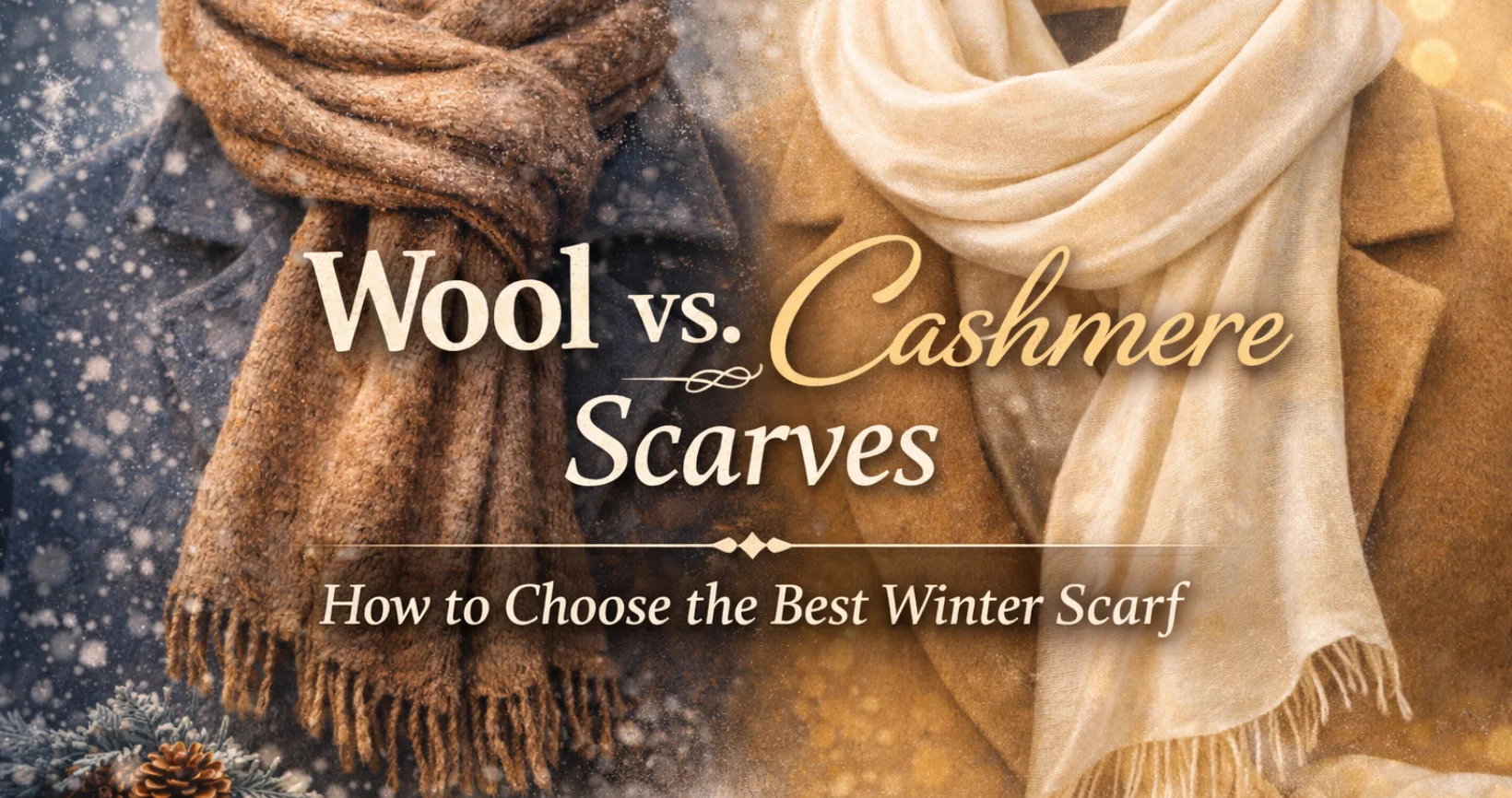
When winter is coming. And before you reach for just any scarf hanging by the door, it’s worth asking: is this thing actually doing its job?
Most people own at least one scarf. But very few people know what it’s made of, or why that matters. You’ll find two materials leading the conversation every single winter: wool and cashmere. Both are natural. Both are warm. Both look great wrapped around a coat collar.
But they are not the same thing.
One is tough, everyday, no-fuss. The other is soft, refined, and feels like wearing a cloud. Choosing the wrong one for the wrong reason can leave you itchy, broke, or both.
This guide breaks it all down. By the end, you’ll know exactly which scarf belongs in your wardrobe.
What is a Wool Scarf?
Wool comes from sheep. Simple as that.
But not all wool is equal. Regular wool is the most common type. It’s dense, warm, and built to last. Think of it like a reliable car. Not flashy, but it gets you where you’re going every single day without complaint.
Then there’s Merino wool, which comes from Merino sheep. It has finer fibers than regular wool. That makes it noticeably softer. Less scratchy. More comfortable against bare skin.
And lambswool sits somewhere in the middle. It’s sheared from a sheep’s first coat, so the fibers are naturally softer and finer than standard wool, though not as delicate as Merino.
Wool scarves have been around for centuries for a simple reason: they work. They’re widely available, reasonably priced, and hold up well under regular use.
What is a Cashmere Scarf?
Cashmere comes from a different animal entirely. The Cashmere goat, primarily found in Mongolia, China, and the Himalayan region, produces an undercoat of incredibly fine, soft fiber. That fiber is what gets spun into cashmere fabric.
Here’s a quick way to understand it. If wool is your dependable everyday jacket, cashmere is the tailored coat you save for special occasions. It looks better, feels better, and costs more. A lot more.
The reason cashmere feels so different is the fiber diameter. Cashmere fibers are significantly finer than most wool fibers. That fineness is what creates the buttery texture people associate with luxury scarves.
It’s also surprisingly warm for how lightweight it is. You get serious insulation without the bulk.
Wool vs Cashmere Scarf: Quick Comparison
Before going deeper, here’s the snapshot view:
| Feature | Wool | Cashmere |
|---|---|---|
| Warmth | High | Very high |
| Softness | Medium | Very soft |
| Weight | Heavier | Lightweight |
| Price | Affordable | Expensive |
| Durability | High | Moderate |
| Daily use | Excellent | Best for occasional wear |
| Maintenance | Easy | Delicate |
This table tells the basic story. Cashmere wins on feel and warmth-to-weight ratio. Wool wins on value and durability. Neither is objectively “better.” It really depends on how you plan to use it.
Cashmere vs Wool: Which is Warmer?
Both materials trap body heat well. But cashmere has a slight edge.
Here’s why. Cashmere fibers have a finer structure that traps tiny pockets of warm air more efficiently. Less bulk, same warmth. That’s the magic. It’s a bit like comparing a thin high-tech sleeping bag to a bulky old duvet. The duvet does the job, but you can feel its weight. The sleeping bag just… keeps you warm without you even noticing it.
That said, a thick, quality wool scarf will keep you just as warm in most practical situations. Unless you’re battling below-zero temperatures or you’re extremely sensitive to cold, the warmth difference between the two won’t dramatically change your day.
For extreme winter climates, cashmere pulls ahead. For moderate winters, wool is more than enough.
Cashmere vs Wool: Which is Softer?
This one’s not even close. Cashmere wins every time.
Cashmere fibers are so fine that fabric made from them feels almost impossibly smooth. It doesn’t scratch. It doesn’t irritate. Even people with sensitive skin tend to do fine with cashmere.
Wool, on the other hand, can feel rough against the skin. Regular wool especially. It’s not unpleasant when wrapped around a coat, but if it’s touching your neck directly, you might notice the scratch.
Merino wool is the exception. It’s much softer than standard wool and sits closer to cashmere in terms of feel. But cashmere still wins in a direct comparison.
Think of it like this. Merino wool is a nice cotton t-shirt. Cashmere is that one well-worn shirt you’ve owned for ten years that somehow just keeps getting softer.
Pros and Cons of Wool Scarves
Pros
Durability. Wool is tough. It resists wear, handles frequent washing better, and doesn’t fall apart easily. Buy a good wool scarf and it’ll be with you for years.
Affordability. A quality wool scarf costs a fraction of what cashmere costs. You can find genuinely warm, well-made wool scarves at every price point.
Versatility. Wool works for every occasion. Commuting, hiking, casual weekends, office winters. It doesn’t feel out of place anywhere.
Easy care. Most wool scarves can handle a gentle machine wash or hand wash without drama. You don’t need to panic every time it gets a bit dirty.
Cons
Can be itchy. This is the classic wool complaint. Coarser wool fibers against bare skin can irritate. Not everyone experiences this, but it’s worth knowing before you buy.
Heavier. Wool scarves add noticeable weight and bulk. Not a dealbreaker, but it’s something to consider if you prefer a lighter wrap.
Pros and Cons of Cashmere Scarves
Pros
Unmatched softness. Already covered this, but it deserves repeating. Nothing feels like cashmere. Nothing.
Lightweight warmth. You get serious heat without the bulk. A thin cashmere scarf will often outperform a thick wool one simply because of how efficiently the fibers retain warmth.
Premium aesthetic. Cashmere drapes beautifully. It has a subtle sheen and a refined look that just reads as quality. You notice it immediately.
Cons
Expensive. Good cashmere costs real money. A quality cashmere scarf can easily run several times the price of a comparable wool option. If budget is tight, it’s a significant barrier.
Delicate. Cashmere requires careful handling. It pills more easily than wool. It’s sensitive to heat, rough washing, and improper storage. Treat it badly and it’ll show.
Can be misrepresented. The market is full of products labeled “cashmere blend” that contain very little actual cashmere. Knowing how to identify real cashmere matters here (more on that below).
Which Scarf is Better for Daily Use?
For everyday use, wool is the smarter choice.
Here’s the reality. When you’re wearing a scarf daily, tossing it in your bag, pulling it on and off, and exposing it to the general chaos of real life, you want something that can take the beating. Wool does that.
Cashmere, worn every day without proper care, will start to show wear faster than you’d expect. The fibers are delicate. Repeated friction causes pilling. Exposure to rough surfaces damages it.
Think of cashmere like a good suit. You wouldn’t wear it every day. You’d wear it when it mattered, take care of it properly, and store it well. That’s when it really shines.
Best Scarf Material for Winter
Cold climates: Cashmere or thick Merino wool. Both provide excellent insulation. Cashmere offers better warmth-to-weight, but a heavyweight Merino scarf will keep you just as comfortable.
Moderate winters: Regular wool is perfect. Lightweight, breathable enough to not overheat indoors, and durable enough for daily wear across the season.
Travel: Cashmere. It packs small, weighs almost nothing, and adds warmth on demand. Perfect for flights, layovers, and unpredictable weather changes.
Wool vs Cashmere for Men vs Women
Both materials work across genders. But there are some styling tendencies worth noting.
For men, wool scarves tend to lean practical and structured. Classic houndstooth, chunky knit, solid colors. They pair naturally with overcoats and casual winter jackets. Merino wool in particular has become a staple in men’s wardrobes because it bridges the gap between functional and polished.
For women, cashmere scarves have long been a wardrobe staple. They’re versatile enough to go from a formal coat to a casual blazer. Worn loosely draped or tied close to the neck, they elevate almost any winter outfit effortlessly.
That said, there are no rules here. A man in a well-chosen cashmere scarf looks sharp. A woman in a chunky wool wrap looks effortlessly stylish. Buy what suits you, not what’s “expected.”
Different Types of Wool Used in Scarves
Not all wool is created equal. A quick breakdown:
Merino Wool is the gold standard of everyday wool. Finer fibers mean less scratching. It’s breathable, moisture-wicking, and soft enough to wear against skin. It’s also more expensive than regular wool but far cheaper than cashmere.
Lambswool comes from a sheep’s very first shearing. First-cut fibers are naturally smoother, which gives lambswool a softer texture than standard wool. It’s a good middle-ground option.
Regular (coarse) wool is the most widely available and affordable. Warmer climates might find it too heavy. It can be scratchy for some people, but it’s extremely durable and budget-friendly.
Merino Wool vs Cashmere: A Closer Look
If you’re choosing between these two specifically, here’s what you need to know.
Merino is softer than standard wool but not as soft as cashmere. It’s more durable than cashmere and handles washing better. A Merino scarf is a genuinely excellent everyday option that bridges the gap between basic wool and luxury cashmere.
If you can’t decide between wool and cashmere, a Merino scarf is often the right call. It’s the practical luxury option. Comfortable enough for sensitive skin, tough enough for daily wear, and priced in a range most people can justify.
Wool vs Cashmere Price Comparison
Here’s roughly what you’re looking at in the current market:
- Basic wool scarf: Widely available at accessible price points. Perfectly functional.
- Merino wool scarf: A step up. Noticeably softer and more refined.
- Cashmere scarf: Genuine cashmere from a quality source sits at a premium. Budget options labeled “cashmere” often contain blended or lower-grade fibers.
The price gap is real. And it reflects the difference in fiber rarity, production effort, and feel.
Is Cashmere Worth the Price?
Honestly? It depends.
If you’re someone who wears their scarf every single day, throws it in a bag, and needs it to survive a rough winter season without special care, no. You’ll be disappointed. A good Merino wool scarf will serve you better.
But if you treat your accessories well, appreciate the feel of genuinely luxurious fabric, or you’re buying a gift that needs to feel special the moment it’s unwrapped, then yes. Cashmere delivers. Completely.
The key is buying real cashmere. Cheap “cashmere” blends often feel similar to regular wool and lose their softness quickly. Stick to reputable sources and check the fiber composition.
How to Care for Wool Scarves
Wool is forgiving. But a little care goes a long way.
- Wash gently. Hand washing in cool water with a mild detergent is ideal. Some wool scarves can handle a delicate machine cycle.
- Avoid hot water. Heat causes wool to shrink. Use cool or lukewarm water.
- Lay flat to dry. Hanging a wet wool scarf stretches it out of shape. Lay it flat on a clean towel.
- Air it out. Wool is naturally odor-resistant. Often, a quick airing is all it needs between wears.
How to Care for Cashmere Scarves
Cashmere needs more attention. But it’s not complicated.
- Hand wash only. Machine washing cashmere, even on delicate, risks damaging the fibers.
- Use a specialist detergent. Wool-specific or cashmere detergents are gentle enough to protect the fibers.
- Never wring it out. Press excess water out gently. Wringing damages the structure.
- Store it folded, not hung. Hanging cashmere causes it to stretch over time. Fold it neatly and store it flat.
- Protect from moths. Natural fibers attract moths. Use cedar or lavender sachets in your wardrobe.
How to Choose the Best Winter Scarf
Four questions to ask yourself:
1. What’s my budget? If you’re spending carefully, a good Merino wool scarf gives you the best value. If budget isn’t a concern, cashmere is worth it.
2. How will I use it? Daily commuter? Go wool. Occasional dinner or travel? Cashmere.
3. What’s my climate? Extreme cold? Prioritize warmth. Cashmere or heavyweight Merino. Milder winters? Regular wool works perfectly.
4. Am I buying for myself or as a gift? For a gift, cashmere feels more special to receive and unwrap. For yourself, practicality often wins.
Wool or Cashmere: What Should You Choose?
Let’s keep this simple.
Choose wool if:
- You want something for daily wear
- Budget is a consideration
- You want low-maintenance care
- You’re buying for outdoor activities or rough conditions
Choose cashmere if:
- You prioritize softness above everything
- You want a refined, lightweight feel
- You’re buying a gift that needs to impress
- You’ll care for it properly and wear it on select occasions
Choose Merino wool if:
- You want the best of both worlds
- You need something soft enough for bare skin but durable enough for regular use
- You’re looking for a practical but premium everyday option
Conclusion
Both wool and cashmere earn their place in a winter wardrobe. They just earn it differently.
Wool is the reliable workhorse. It shows up every day, does its job without fuss, and asks very little from you in return. Cashmere is the refined choice. It rewards careful ownership with warmth, softness, and a feel that nothing else quite replicates.
The right choice comes down to one thing: how you actually live.
If your scarf is going to be dragged through daily commutes, tossed into bags, and worn through a full season of unpredictable weather, buy a good Merino wool scarf. It will treat you well.
If you want something special. Something you reach for when the occasion calls for it, or something to give someone you want to impress, cashmere is worth every penny.
A great scarf isn’t just about keeping warm. It’s the finishing touch on a well-put-together winter look. Choose the one that fits your life, and it’ll earn its place every single season.