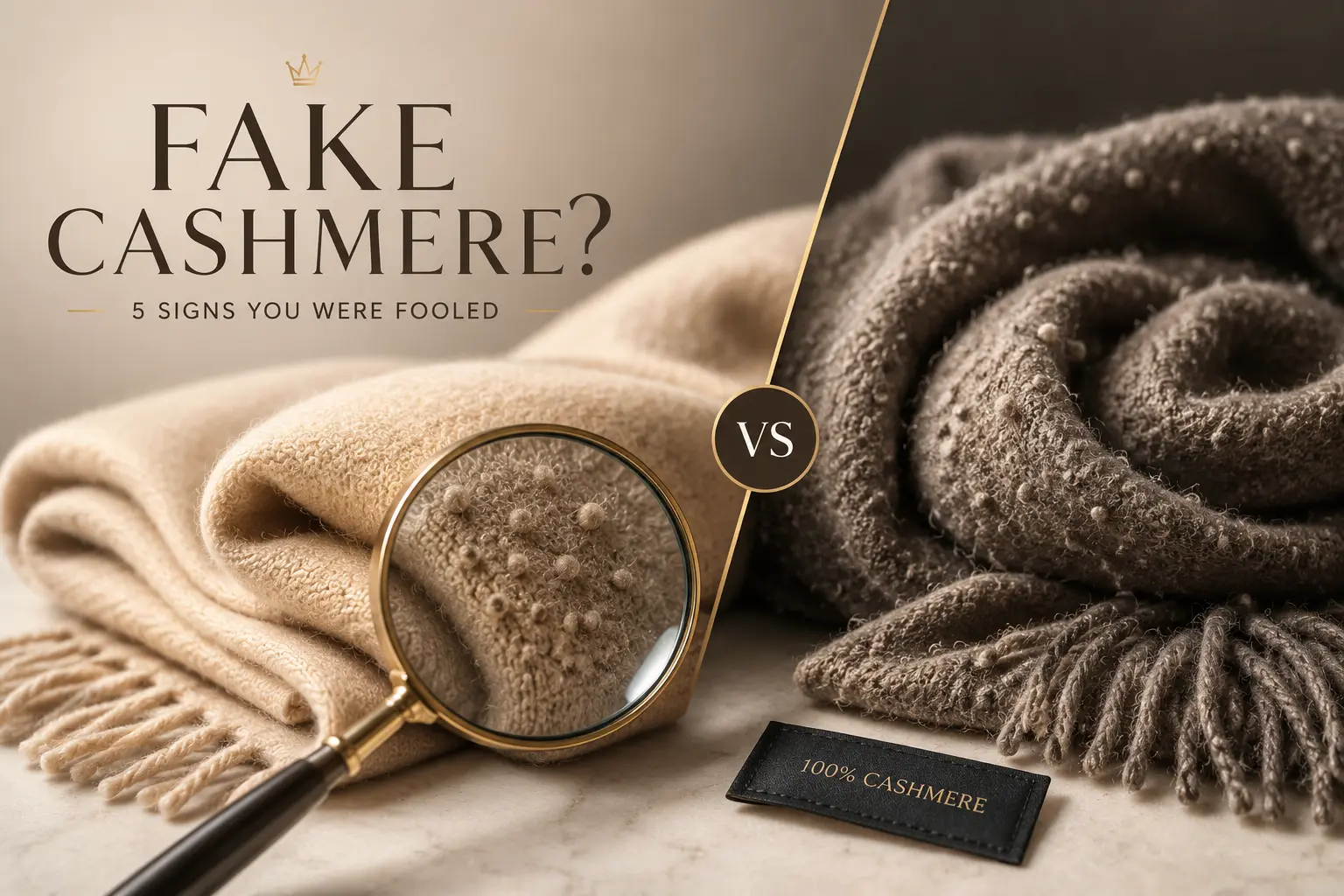
You spent good money on what the label promised was cashmere. Three months later, the scarf looks like it lost a fight with a lint roller. Little balls of fibre have gathered under your chin, along the folds, and everywhere the fabric touches your coat. Something feels off, and you are right to question it.
The uncomfortable truth is that a large share of “cashmere” scarves sold today are not what they claim to be. Some are cheap blends dressed up in marketing language, others are low-grade cashmere from short fibres that were never meant to last, and a small number are outright counterfeit. The result is the same: excessive pilling, poor warmth, and a scarf that ages badly within a single season.
This guide explains what real cashmere actually is, why it should not pill within weeks, and how to spot the five telltale signs that you did not get what you paid for.
What Cashmere Actually Is
Cashmere is the soft undercoat of the cashmere goat, combed by hand during the spring moulting season in high-altitude regions like Mongolia, China, and Kashmir. Each goat produces only 150 to 200 grams of usable cashmere per year, which is why the fibre is so expensive.
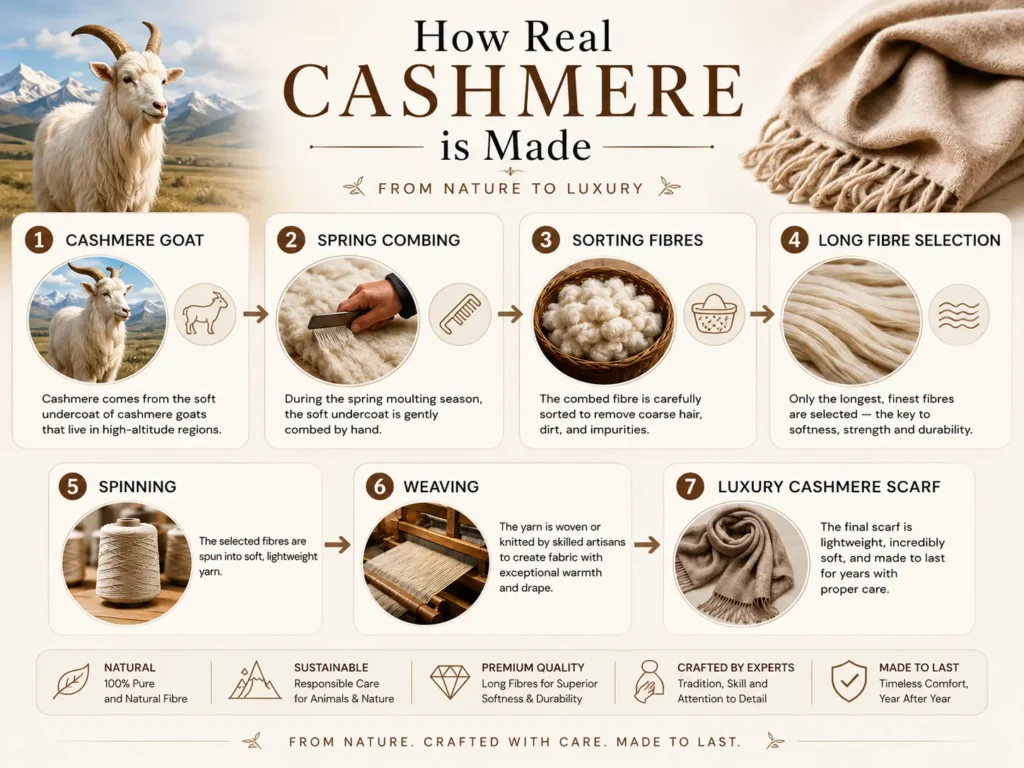
Three measurable properties define real cashmere:
- Long fibre length: 36 mm or more is considered premium
- Fine diameter: 14.5 microns or less is the luxury standard
- Uniform crimp: Consistent waviness that traps warm air
These properties are what give cashmere its signature softness, warmth, and drape. They are also what determine whether the scarf will pill within weeks or last for decades.
Why Real Cashmere Should Not Pill Excessively
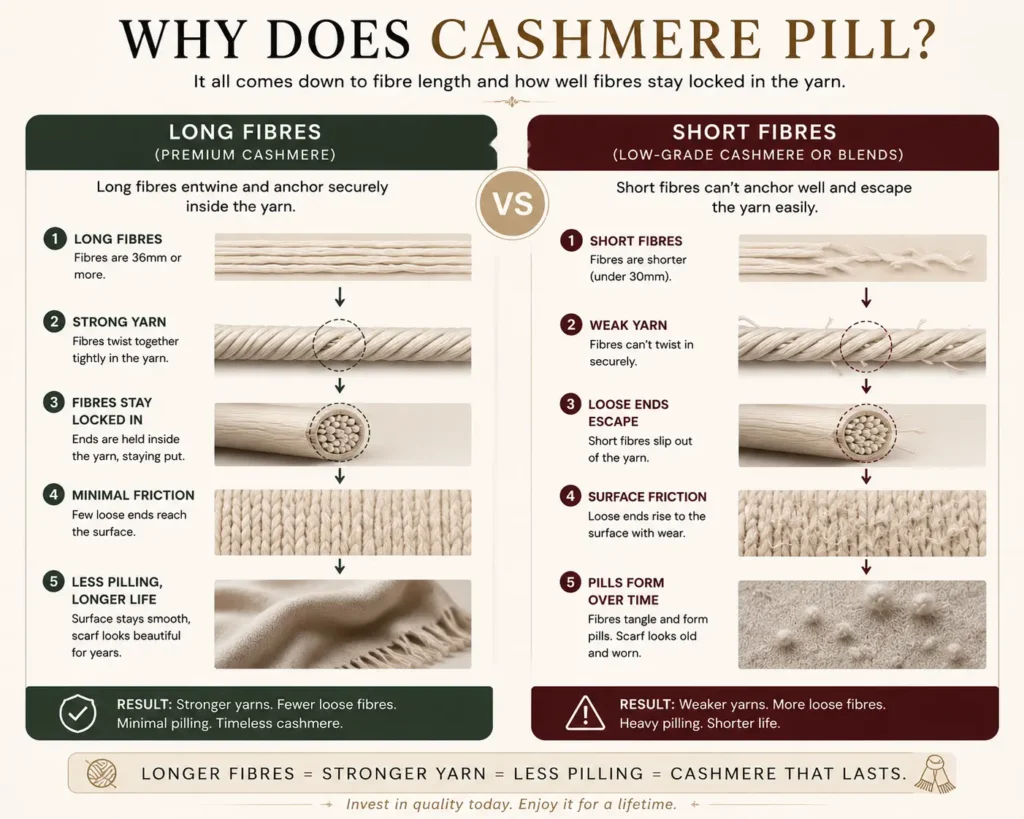
Some pilling is normal for any natural fibre, including cashmere. The first few wears will produce a small amount of shedding as loose surface fibres release. That is expected, and a soft brush or cashmere comb will clear it.
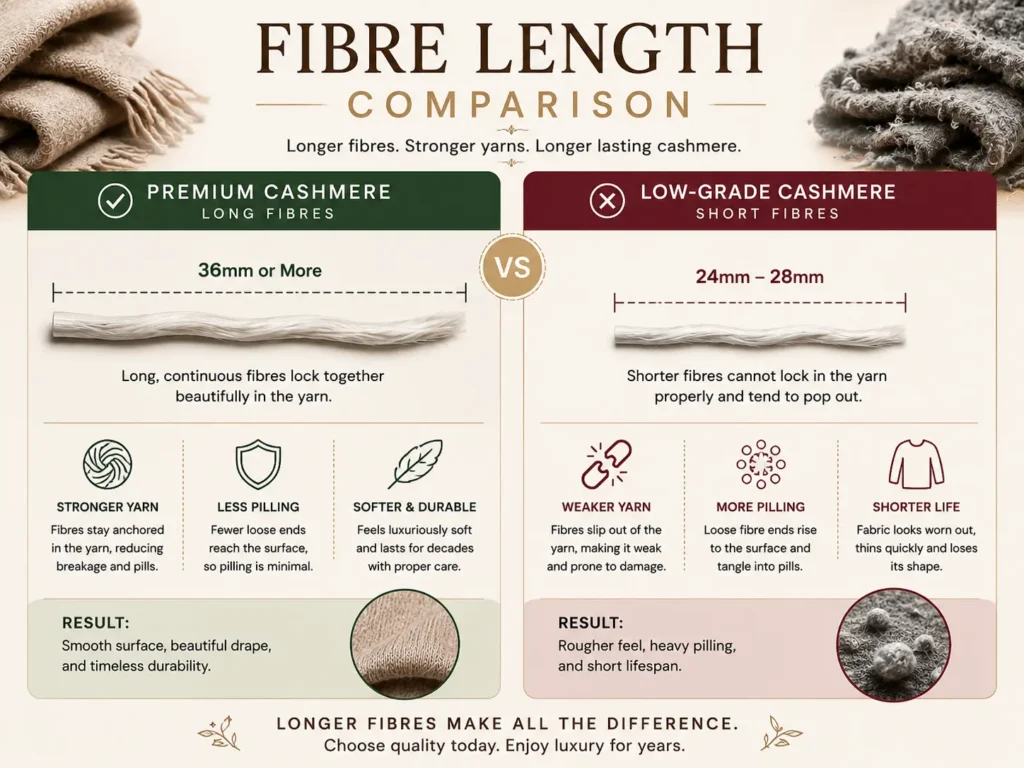
Excessive pilling is a different story. When a scarf develops thick clusters of matted fibre within two or three months of light use, the fibre length is almost certainly too short to be premium cashmere. Short fibres cannot lock into the yarn twist properly, so they migrate to the surface, tangle, and form pills.
Premium cashmere from long fibres sheds lightly, softens with wear, and can genuinely last 20 years or more with basic care. Cheap cashmere from short fibres pills aggressively, thins out, and loses shape within a single winter.
The Cashmere Market’s Dirty Secret
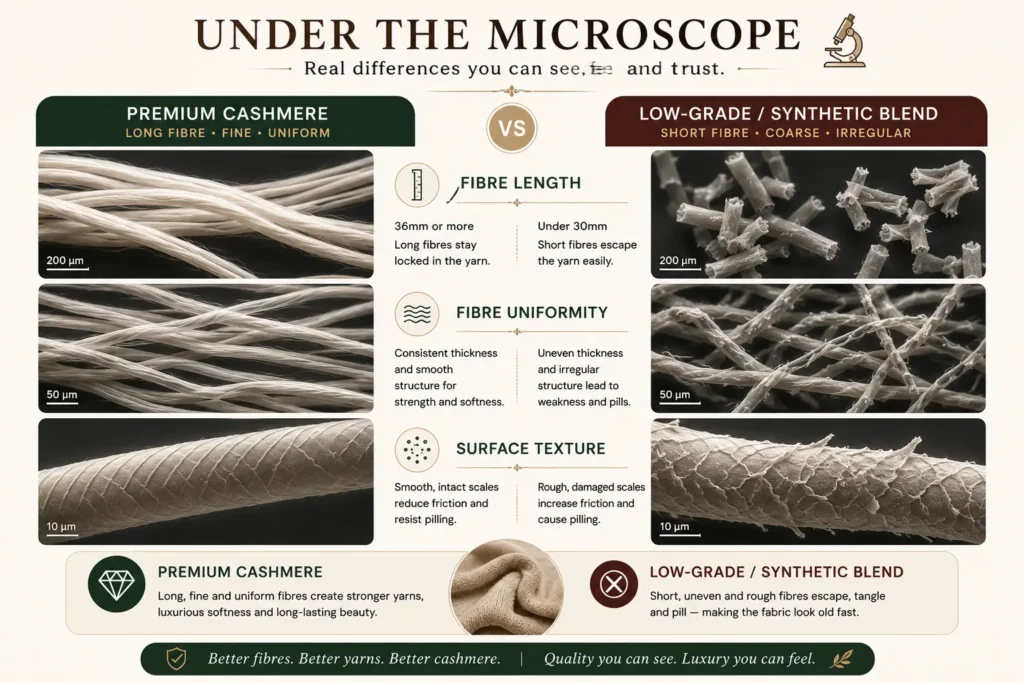
The label “100 percent cashmere” is not always what it seems. Investigations in the United States, the United Kingdom, and Europe have repeatedly found scarves and sweaters labeled as pure cashmere that were actually blends of wool, yak, viscose, or synthetic fibres. The mislabeling is worst in the mass-market, discount, and unregulated online segments.
A few reasons this happens:
- Weak enforcement: Textile labelling laws exist, but are rarely tested in retail
- Oversupply pressures: Short-fibre cashmere is far cheaper than long-fibre and floods the market
- Consumer confusion: Most buyers cannot tell the difference by touch alone
- Marketing loopholes: Terms like “cashmere touch”, “cashmere feel”, and “cashmere blend” have no strict definition
The result is a market where a genuine premium cashmere scarf can cost 8 to 10 times more than a mislabeled one that looks similar on the shelf.
5 Signs You Did Not Actually Buy Cashmere
If your scarf is behaving badly, one of these five red flags is almost certainly the reason.
Sign 1: The Scarf Pilled Within Weeks
Genuine cashmere from long fibres sheds lightly at first, then settles. If you see dense pilling within four to six weeks of normal use, the fibre length was too short to lock into the yarn. It is almost certainly a low-grade or blended cashmere.
Sign 2: The Price Was Too Good to Be True
A genuine 200-gram pure cashmere scarf, made from long fibres, is expensive to produce even at wholesale. Very low retail prices are usually a signal that corners were cut on fibre grade, blending, or origin. If the deal felt suspiciously good, it likely was.
Sign 3: The Label Says ‘Cashmere Blend’ or ‘Cashmere Touch’
“Cashmere blend” is legally allowed to contain as little as 5 percent cashmere in some jurisdictions. “Cashmere touch” and “cashmere feel” contain no cashmere at all. If the label uses these phrases, the scarf is not pure cashmere.
Sign 4: The Fabric Felt Silky, Not Warm
Cashmere is not silky. It is soft, matte, and warmer than wool at the same weight. If your scarf felt slippery or shiny in the store, you likely bought a viscose, polyester, or acrylic blend marketed as cashmere.
Sign 5: The Scarf Has No Origin or Certification
Authentic cashmere is traceable. Reputable manufacturers state the origin (Mongolia, China, Kashmir, or Nepal), often name the mill, and can provide fibre certification on request. A blank label or a vague “imported” origin is a red flag.
How to Test if a Cashmere Scarf is Real
You can run a few simple checks at home before writing off a scarf as fake.
- Feel test: Real cashmere is warm to the touch almost immediately, soft, and matte. Synthetic blends feel cool, silky, or plastic
- Stretch test: Gently stretch a small section. Real cashmere returns to shape quickly. Blends stay stretched or feel overly elastic
- Rub test: Rub the fabric between your palms for 10 seconds. Real cashmere warms up noticeably. Synthetics stay neutral
- Burn test: In a safe setting, a single fibre from real cashmere burns slowly, smells like burnt hair, and leaves a soft ash. Synthetics melt into a hard bead
- Label check: Look for country of origin, fibre percentage, and any certification from bodies like the Cashmere and Camel Hair Manufacturers Institute (CCMI)
None of these tests is perfect on its own, but together they will confirm most authenticity questions.
Real vs Fake Cashmere: A Quality Comparison
| Feature | Real Premium Cashmere | Fake or Low-Grade Cashmere |
| Fibre length | 36 mm or more | Under 30 mm |
| Fibre diameter | 14.5 microns or less | 16 to 19 microns |
| Feel | Warm, soft, matte | Cool, silky, or plasticky |
| Pilling | Light sheds, then settles | Heavy pilling within weeks |
| Warmth | Around 3 times warmer than wool | Comparable to acrylic |
| Lifespan | 15 to 25 years with care | 1 to 2 seasons |
| Label transparency | Clear origin and fibre percentage | Vague, missing, or misleading |
| Approximate wholesale cost | High, reflecting fibre scarcity | Very low |
How Bright Star Sources and Manufactures Authentic Cashmere
Bright Star has been working with cashmere since 1950, when the founding family established KCS Kashmir Shawl Emporium in Kashmir, one of the historic centres of cashmere craftsmanship. Three generations later, the business supplies premium retailers, private label brands, and boutique importers across Europe, North America, Australia, and the Middle East with genuine, traceable cashmere.
Here is what buyers get when they source cashmere through Bright Star:
- Long-fibre cashmere: 36 mm and above, sourced from verified mills
- Fine micron count: 14.5 microns or finer for luxury lines
- Full traceability: Origin, mill, and fibre grade documented for every order
- Grade A quality control: Each piece checked for pilling resistance, drape, and finish
- Custom production: Colours, weaves, prints, and packaging tailored to the buyer’s brand
- Ethical sourcing: Working with mills that follow sustainable herding and processing practices
You can explore the full range of our shawl collection, along with companion pages featuring stoles, throws, and cushion covers, all in coordinated cashmere and wool blends.
What to Ask Before Sourcing Cashmere for Your Brand
If you are a retailer or private label brand, five questions separate genuine suppliers from resellers of low-grade stock:
- What is the fibre length in millimetres? Anything under 34 mm is not premium
- What is the fibre diameter in microns? Anything above 15.5 is not luxury grade
- Where is the cashmere sourced from? Verified origins include Mongolia, Inner Mongolia, Kashmir, and Nepal
- Is there fibre certification available? Reputable suppliers can provide lab reports on request
- How is quality control managed? Look for per-piece inspection, not batch sampling
These questions filter out the vast majority of unreliable sources within the first supplier conversation.
Ready to Source Cashmere That Actually Lasts?
The cashmere market is full of shortcuts, but real long-fibre cashmere still exists, and it is worth every rupee. If you are building a brand, running a boutique, or scaling an accessories line, sourcing directly from a manufacturer that documents fibre length, micron count, and origin is the fastest way to avoid the mislabeled stock that dominates the mass market.
Explore Bright Star’s cashmere range at bright-star.co.in or reach out for a wholesale quote tailored to your next collection.
Frequently Asked Questions
Why does my cashmere scarf keep pilling?
Excessive pilling usually means the cashmere was made from short fibres under 30 mm. Short fibres migrate out of the yarn twist, tangle at the surface, and form dense pills within weeks of normal wear.
Is all cashmere supposed to pill a little?
Yes, all-natural fibre garments shed some fibres at first, and cashmere is no different. Light initial shedding is normal, but heavy pilling within a month usually signals low-quality or blended cashmere.
How can I tell if my scarf is real cashmere?
Real cashmere feels warm almost instantly, is soft and matte rather than silky, and returns quickly to shape after stretching. Check the label for origin, fibre percentage, and any independent certification listed.
What is the difference between cashmere and a cashmere blend?
Pure cashmere is 100 percent cashmere fibre. A cashmere blend can legally contain as little as 5 percent cashmere in some markets, mixed with wool, viscose, or synthetics that reduce both cost and quality.
Where does the best cashmere come from?
The finest cashmere comes from Mongolia, Inner Mongolia, Kashmir, and parts of Nepal. Cold climates produce longer, finer undercoats. Bright Star sources cashmere from these regions for its wholesale and private label buyers.
Can real cashmere be affordable?
Genuine long-fibre cashmere is never truly cheap because the fibre itself is scarce. Wholesale and direct-from-manufacturer sourcing can bring the price down significantly compared with luxury retail, without sacrificing fibre quality.
How should I care for a real cashmere scarf?
Hand wash gently in cool water with mild soap, or use a cashmere-safe dry cleaner. Store folded flat with cedar, never on a hanger, and use a cashmere comb for light pilling.
Do certifications for cashmere really matter?
Yes, certifications from bodies like the Cashmere and Camel Hair Manufacturers Institute confirm fibre content and origin. For B2B buyers, mill-level documentation and lab reports offer even stronger assurance of authenticity.
Can Bright Star supply certified cashmere for private label brands?
Yes, Bright Star provides certified long-fibre cashmere with full origin traceability, fibre reports, and per-piece quality control. Private label buyers receive documentation with each order, tailored to brand and market compliance needs.
What is the minimum order for cashmere scarves from Bright Star?
Minimum orders are flexible for genuine buyers, typically starting from around 500 pieces. Bright Star works with boutique brands and large retailers alike, matching production scale to the buyer’s project requirements.