The premium accessories market has changed. Quietly. Steadily. And in one clear direction.
Brands and retailers are moving away from synthetic alternatives. They want natural fibres. They want performance. They want a story they can sell. And right at the top of that list sits the merino wool scarf.
But here is the thing. Most of the content out there about merino wool is written for the end consumer. The person standing in a shop, wondering if it is worth the price tag. That is not you.
You are a brand owner. A sourcing manager. A retail buyer. You need to understand merino wool at a different level. Not just “it feels nice.” But why it commands the price it does. What specs to look for. How it compares to cashmere when you are making a stocking decision. And where to source it without compromising on quality.
That is exactly what this guide covers. Consider it your complete B2B reference for the merino wool scarf category.
What Is Merino Wool and Why Does It Command a Premium?
Let’s start at the source.
Merino wool comes from the Merino sheep breed. Simple enough. But what makes it genuinely different from standard wool is one number: micron count.
Standard wool sits at 30 microns or above in fibre diameter. Merino wool typically sits between 15 and 24 microns. To put that in perspective, a human hair is roughly 70 microns wide. Merino fibre is extraordinarily fine. And because the fibre is so fine, it bends when it touches your skin instead of scratching it. That is where the softness comes from. It is not a marketing claim. It is physics.
But softness is only one part of what makes merino special.
Merino wool is naturally breathable, moisture-wicking, and odour-resistant. Think of it like a built-in climate control system. Your body stays comfortable whether you walk into a heated airport lounge or stand outside in January. Synthetic fleece cannot do that. Standard wool does not do it this well.
I have worked with buyers who initially questioned the price gap between merino and standard wool. Every single time, once they understood what the fibre actually does, the question changed from “why is it this expensive” to “why would I stock anything else in this category.”
The premium price is justified by the breeding, the processing, and the certification involved. The Woolmark Company sets the global benchmark quality standards for merino. A Woolmark-certified product signals verified fibre quality to buyers across every market. When you stock a 100% merino wool scarf, you are stocking a product with a credible, verifiable story behind every fibre.
Merino Wool Scarf vs Cashmere Scarf: What Brands and Retailers Need to Know
This is the question every buyer eventually asks. And the honest answer is this.
Both win. In different areas.
Do not let anyone tell you merino is “just as good as cashmere.” And do not let anyone tell you cashmere is simply the better choice. It depends entirely on your brand positioning, your target retail price, and how your customer actually uses the product.
Here is the comparison across the dimensions that matter for a real sourcing decision:
| Factor | Merino Wool Scarf | Cashmere Scarf |
|---|---|---|
| Fibre softness | Very soft (15 to 24 microns) | Exceptionally soft (14 to 19 microns) |
| Warmth-to-weight ratio | High, good insulation with light drape | Very high, ultra-lightweight warmth |
| Durability | Excellent, holds shape and resists wear | Moderate, pills more easily over time |
| Washability | Machine washable on wool cycle | Dry clean or hand wash only |
| Wholesale price | Consistent and accessible | Higher and harvest-dependent |
| Retail price positioning | Premium | Luxury |
| Consumer perception | Premium natural fibre | Heritage luxury material |
Cashmere leads on luxury perception: Full stop. If your brand sits at the very top of the market and your customer expects to pay for that story, cashmere delivers it.
Merino leads on durability, washability, and price consistency: If you are building a premium range that customers will actually wear and not just receive as a gift and hang in a wardrobe, merino is the smarter choice. It also gives you a more reliable cost structure across seasons. Cashmere wholesale prices shift with harvest conditions in Mongolia and China. Merino does not carry that same volatility.
Here is a practical way to think about it. Cashmere is the gift your customer buys once and treats carefully. Merino is the scarf they reach for every single day of winter. Both have a place. They serve different retail moments.
For many brands, the smart move is to stock both. Merino as your accessible premium layer. Cashmere as the top-tier gifting option. They do not compete. They complement each other in the range.
Key Specifications to Know When Sourcing Merino Wool Scarves at Wholesale
This is where consumer-facing merino content completely fails the B2B buyer.
Knowing that merino is “soft and breathable” is fine for writing a product description. It is nowhere near enough for placing a wholesale order. When you sit across a supplier and discuss a bulk order, you need to speak the language of specifications.
Here is what to know and what to ask for.
Micron Count: Micron count measures fibre diameter. The lower the number, the finer and softer the wool. Superfine merino sits at 18 microns or below. That is the softest, most premium tier. Fine merino runs from 18 to 20 microns. Standard merino sits at 22 to 24 microns, which is still excellent quality and widely used in mid-market premium scarves.
Always ask your supplier to specify the micron count on the product spec sheet. “Merino wool” without a micron spec is like ordering a diamond without asking for the carat weight. The number matters.
GSM (Grams Per Square Metre)
GSM tells you how heavy the fabric is. For merino wool scarves, here is how the ranges break down:
- Lightweight (150 to 200 GSM): Best for transitional seasons, layering pieces, and ladies accessories where versatility and drape matter
- Mid-weight (200 to 280 GSM): The sweet spot for most retail merino scarves. Warm enough for winter, not too heavy to wear comfortably
- Heavyweight (280 GSM and above): Substantial winter scarves and mufflers. More structure, more warmth, suits men’s winter ranges well
Match your GSM to your retail season and your target customer before you order. A lightweight 160 GSM merino scarf ordered for a cold-climate winter range will disappoint customers. A 300 GSM heavyweight merino in a spring accessories edit will not move.
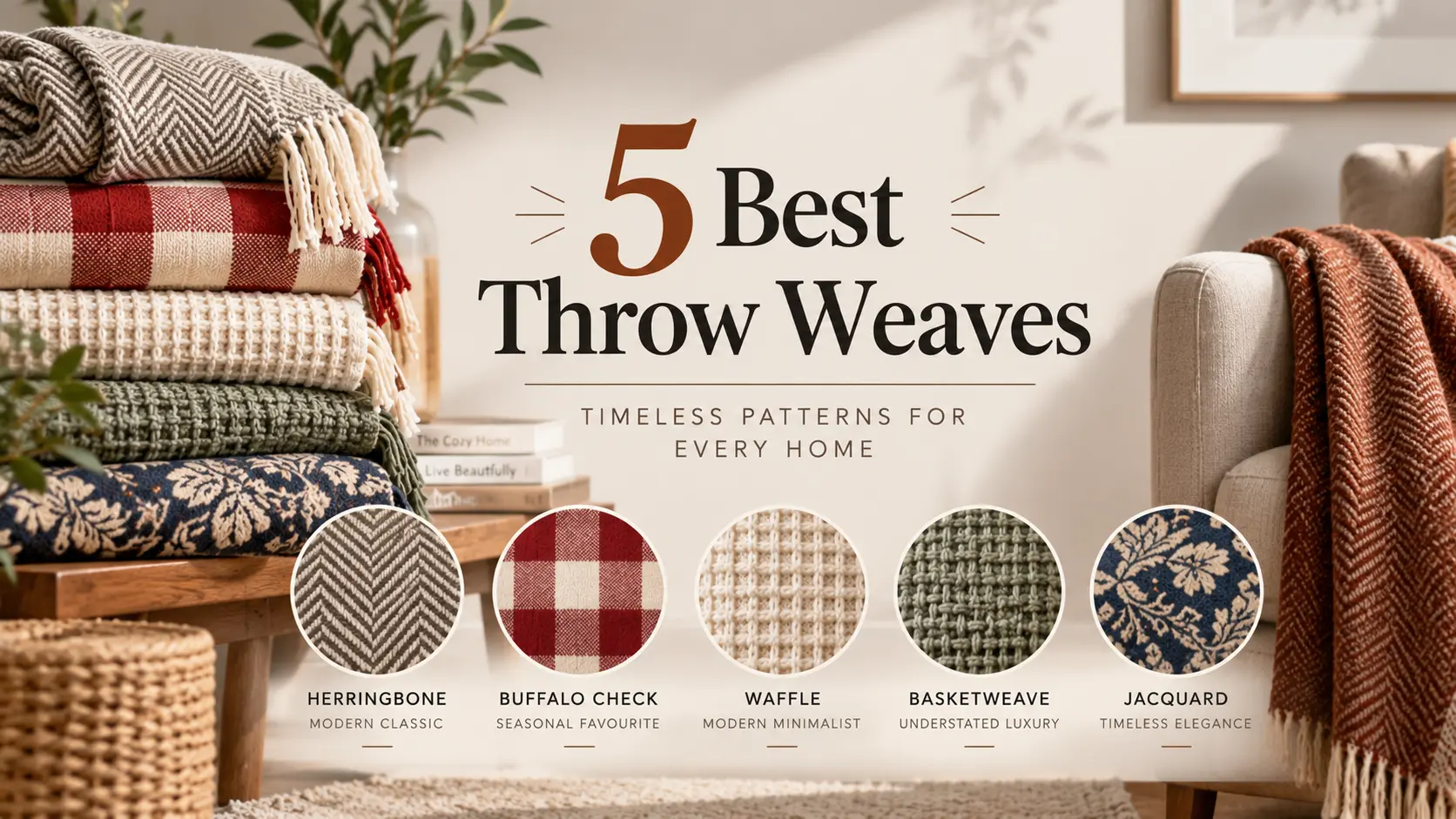
Weave or Knit Structure: How the fabric is constructed affects how the finished scarf looks, drapes, and sells. Plain weave gives you a flat, smooth face. Clean and contemporary. Rib knit adds texture and stretch, popular in men’s ranges. Herringbone gives a classic pattern that reads well in heritage or country brand positioning.
Your design brief should specify the structure alongside GSM and micron. Do not leave it open for the manufacturer to decide by default.
Woolmark Certification: The Woolmark logo is a quality guarantee. It tells buyers and end consumers that the wool used has been verified against global fibre standards. For B2B buyers, sourcing Woolmark-certified product gives you something to put on your hangtag. It is a provenance signal that justifies the price point at retail. Not all merino scarves carry this certification, so ask your supplier directly and ask for documentation.
Pure Merino vs Merino Blends: A 100% merino wool scarf is the premium benchmark. But blends are commercially relevant and worth understanding. Merino-silk blends add a subtle sheen and improve drape while bringing the cost down slightly. Merino-cashmere blends bring the feel of cashmere positioning without the full cashmere price tag.
Blends can make real commercial sense for certain price points. Just be transparent with your retail customers about what they are buying. A “merino-cashmere blend” sold honestly will outperform a questionable “pure cashmere” claim every time. Sophisticated buyers see through vague material descriptions quickly.
Men’s vs Ladies Merino Wool Scarves: Sourcing Considerations for Retailers
Buying merino scarves across gender lines is not complicated. But the differences are real enough that getting the split wrong can leave inventory stuck.
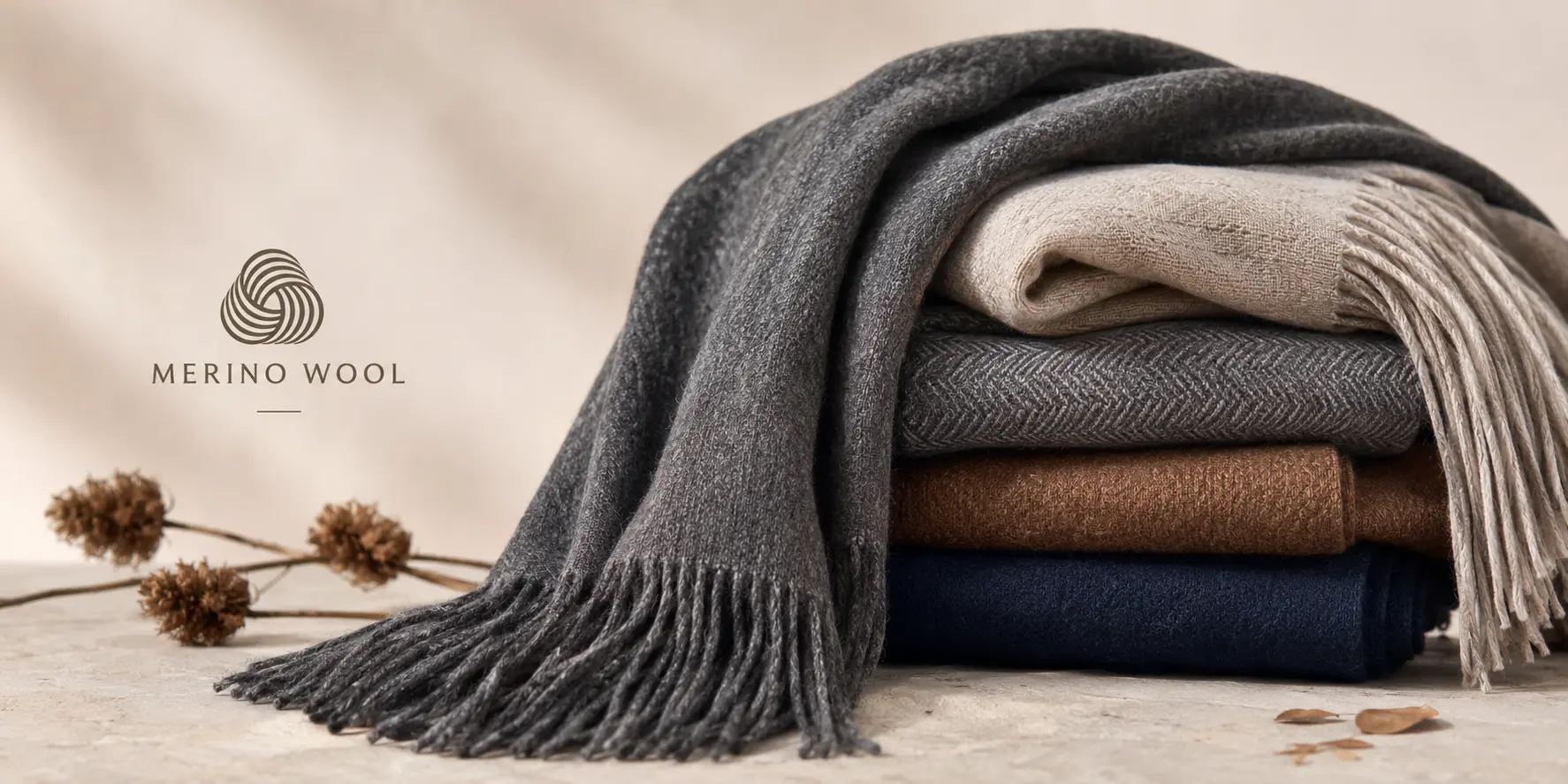
Merino wool scarves for men: tend to run larger. Longer and wider, designed to wrap generously around the neck and tuck into a coat collar. Standard dimensions sit around 180 to 200 cm long by 30 to 35 cm wide. GSM skews heavier, typically in the 250 to 300 range, to match the expectation of warmth and substance. Colour palettes run neutral and classic. Navy, charcoal, camel, grey, forest green. Safe choices that sell consistently across retail seasons.
Merino wool scarves for ladies: give you more format flexibility. Lighter GSM works well, around 150 to 220, for a versatile accessory that moves across seasons. Dimensions can vary significantly, from narrow stoles to wide wraps. Colour and pattern variety is broader. The styling potential extends beyond pure winter warmth into year-round accessory territory, which gives you better sell-through over a longer retail window.
Merino wool mufflers: deserve a separate mention here. A muffler is shorter and thicker than a standard scarf. Think of it as a neck warmer that sits at the collar rather than draping over a coat. Typically around 100 to 120 cm long, with a heavier GSM and more structure. Mufflers suit men’s gifting ranges and cold-climate retail particularly well. If your retail context supports it, including a muffler SKU alongside your standard scarf range gives buyers a lower price point entry option without compromising on material quality.
When you place a wholesale order, specify gender, dimensions, GSM, and format type separately and clearly. Do not assume your supplier’s defaults match your retail expectations.
How to Care for Merino Wool Scarves: What Retailers Need to Tell Their Customers
Care requirements are a practical retail concern that buyers often overlook until it becomes a customer service issue. Know this before you stock.
Yes. 100% merino wool can be machine washed.
This is one of merino’s most commercially useful advantages over cashmere. A wool cycle with cold water and a low spin handles merino well. Lay flat to dry rather than tumble drying. No dry cleaning bill. No complicated care ritual. For a premium natural fibre, that is a significant positive at retail. And it is a point your retail staff should communicate actively to customers who are hesitating at the price tag.
Now for the honest part.
What are the disadvantages of merino wool?
There are a few, and you should know them before stocking it. The higher price point is the obvious one. Merino also requires gentle washing, not a standard hot cycle. And with heavy friction over time, it can pill. Pilling is more common in lower-GSM knitted merino than in woven constructions or higher-GSM products. Set your retail customers’ expectations correctly on this point and it will not turn into a complaint.
Brief your retail team on care guidance before the product hits the floor. Put it on the hangtag. A well-informed customer is a satisfied customer, and a satisfied customer at a premium price point is a repeat customer.
Why Source Merino Wool Scarves from India?
India’s textile manufacturing capability is often underestimated in premium accessories sourcing conversations. That underestimation is increasingly a mistake.
Indian manufacturers work with both domestically sourced fine wool and imported Australian merino. That means access to the same high-grade raw material that European manufacturers use, at a significantly more competitive cost base. The knitting and weaving infrastructure is mature. Design capability for private label production, custom construction, and bespoke colourways is available at genuine scale.
For brands that need quality verification, Woolmark-certified production facilities exist within India’s manufacturing base. That gives you the certification story alongside the cost advantage. You do not have to choose between the two.
The pricing relative to European manufacturing is well established. But what is less discussed is the consistency of Indian merino manufacturing. Repeat orders come in reliably. Lead times are predictable. And the technical fluency around GSM, micron specifications, and construction details is genuine, not surface-level.
Sourcing fine merino wool scarves from India is no longer a compromise. For mid-market premium brands building a credible merino scarf range, it is often the most commercially rational sourcing decision available.
Frequently Asked Questions
Is merino wool good for a scarf?
Yes, merino wool is one of the best materials available for a premium scarf. Its fine fibre diameter makes it genuinely soft against the skin, while its natural temperature-regulating and moisture-wicking properties make it functional across seasons. For retailers, it combines consumer appeal with a quality story that holds up under scrutiny.
What is a disadvantage of using merino wool?
The main disadvantages are cost and care requirements. Merino commands a higher wholesale price than standard wool or synthetic alternatives. It also requires gentle washing on a wool cycle rather than a standard machine wash, and can pill over time with heavy friction. These are manageable trade-offs for the right retail positioning.
Are merino wool scarves good?
Yes, particularly for premium and mid-luxury retail ranges. They offer genuine performance properties including warmth, softness, and breathability that synthetic alternatives cannot match, alongside a natural fibre provenance story that resonates with quality-conscious consumers.
Is merino wool costly?
Relative to synthetic and standard wool alternatives, yes. Relative to cashmere, merino is significantly more accessible and price-consistent. For a premium scarf range, merino sits at a price point that is justifiable at retail without requiring the top-tier luxury positioning that cashmere demands.
Can 100% merino wool be washed?
Yes. Merino wool can be machine washed on a wool or delicate cycle using cold water. Lay flat to dry. This is a practical advantage over cashmere, which typically requires dry cleaning or careful hand washing. It is a care benefit worth communicating clearly on hangtags and in retail briefings.
What is the unhealthiest fabric to wear?
Synthetic fabrics such as polyester and nylon are generally considered the least beneficial for skin health. They do not breathe, trap heat, and can cause irritation for sensitive skin. Natural fibres like merino wool allow airflow and are far better suited for direct skin contact over long periods.
Which is better, cashmere or merino?
It depends on your brand positioning and retail context. Cashmere leads on luxury perception and softness at the finest micron levels. Merino leads on durability, washability, and pricing consistency. Many brands stock both, using merino for their accessible premium tier and cashmere as a top-end gifting option.
Why is merino so expensive?
Merino sheep produce a relatively small yield of fine-diameter fleece compared to standard wool breeds. The selective breeding, specialised processing, and quality certification involved in producing genuine fine merino all contribute to the price. At superfine grades below 18 microns, the cost increases further. Woolmark certification adds a verifiable quality layer that carries real cost but also real retail value.
Conclusion
Merino wool scarves occupy a strong, well-justified position in the premium accessories market. The fibre delivers on every dimension a quality-focused brand needs. Softness. Performance. Durability. A provenance story that your retail customers will actually believe.
For brands building or expanding a premium scarf range, merino is a material that earns its price point at every step of the chain.
If you are looking to source merino wool scarves for your brand or retail range, get in touch with Bright Star to discuss specifications, GSM options, and wholesale requirements. Explore the full scarves and shawls range to see what is possible across merino and fine wool constructions.