A scarf is one of the most versatile pieces in any wardrobe. The same rectangle of fabric can look polished at a boardroom meeting, playful at a weekend brunch, or dramatic on a red carpet. What changes is the knot. This visual guide walks you through 20 tried-and-tested ways to tie a scarf, with clear tips on which style suits which fabric, occasion, and outfit.
Whether you are working with a lightweight silk stole, a chunky wool wrap, or a printed cotton square, there is a knot here that will elevate your look. At Bright Star, we have been manufacturing scarves and shawls in India since 1950, so we have a strong sense of what fabrics and finishes are best suited to every knot in this guide.
Why Learning to Tie a Scarf Matters
A well-tied scarf does more than keep you warm. It sharpens an outfit, hides a plain neckline, and adds personality without a single stitch of new clothing. For anyone building a capsule wardrobe or trying to make five pieces feel like fifty, mastering a handful of scarf knots is one of the highest-return style skills you can learn.
Fashion editors, stylists, and wholesale buyers at Bright Star will all tell you the same thing: the right knot can make an inexpensive scarf look luxurious, and the wrong one can flatten a beautiful piece. Learning even three or four of these styles will change how you wear every scarf in your closet.
What You Need Before You Start
Before diving into the knots, take a moment to assess your scarf. The style you choose should suit the shape, weight, and drape of the fabric.
Common scarf types include:
- Square scarves in silk or cotton, often 70×70 cm or 90×90 cm
- Rectangular scarves for classic drapes and loops
- Long stoles for wraps and elegant evening styles
- Oversized shawls for cold-weather wraps and shoulder covers
- Skinny scarves for accent knots and neckties
Bright Star manufactures all of these formats for wholesale and export markets, working with silk, wool, cashmere, viscose, and cotton blends. If you want a deeper look at fabric options and finishes, our stoles manufacturing page and shawls collection are good starting points.
20 Ways to Tie a Scarf
We have grouped the 20 styles into four categories so you can find one for every situation, mood, and season.
Classic and Timeless Knots
1. The Simple Loop
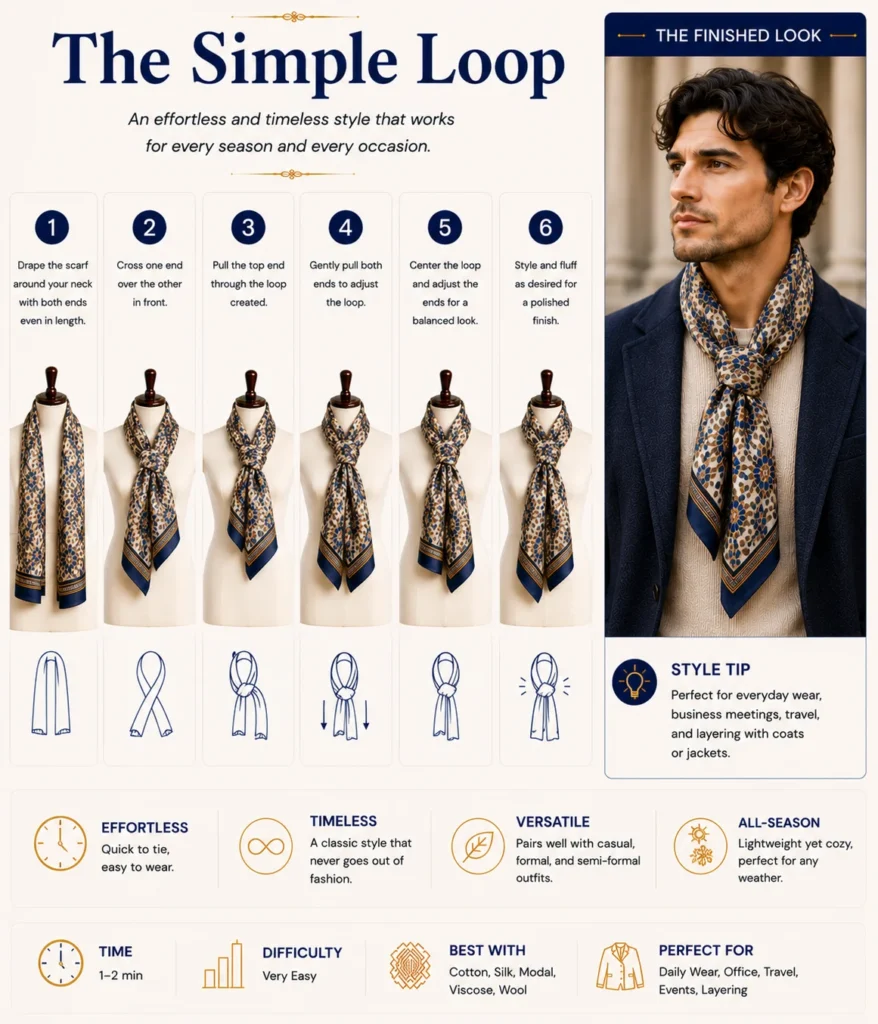
Fold the scarf in half lengthwise, drape it around your neck, and pull the loose ends through the folded loop. Clean, quick, and it works with almost any outfit or fabric weight.
2. The Parisian Knot
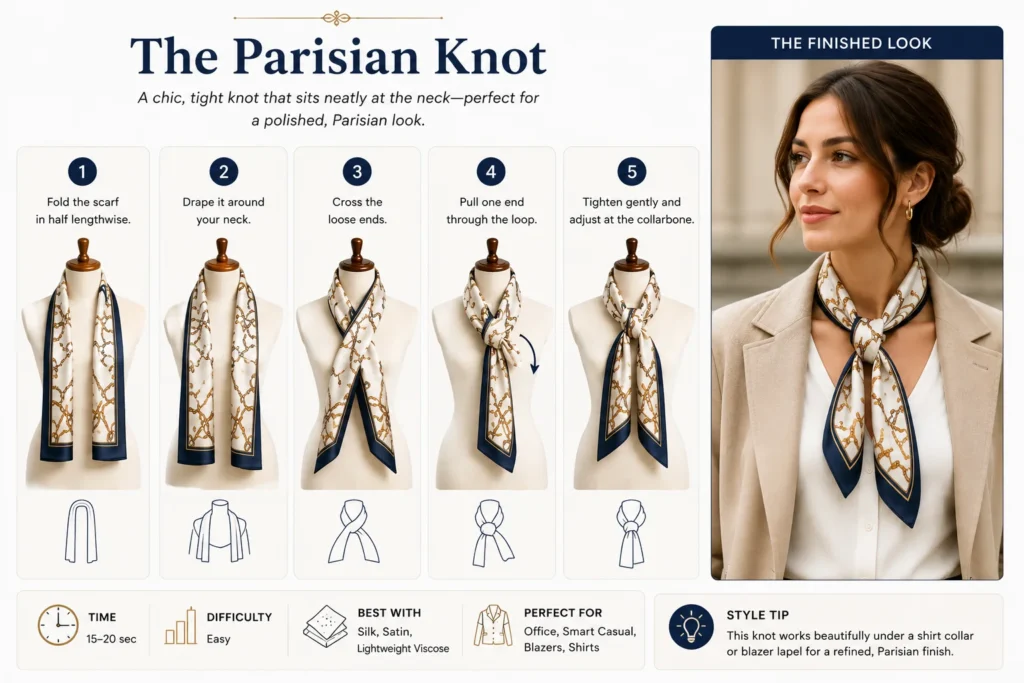
A tighter version of the simple loop. Best with lightweight silk or viscose scarves that hold a neat fold under a shirt collar or blazer lapel.
3. The Slip Knot
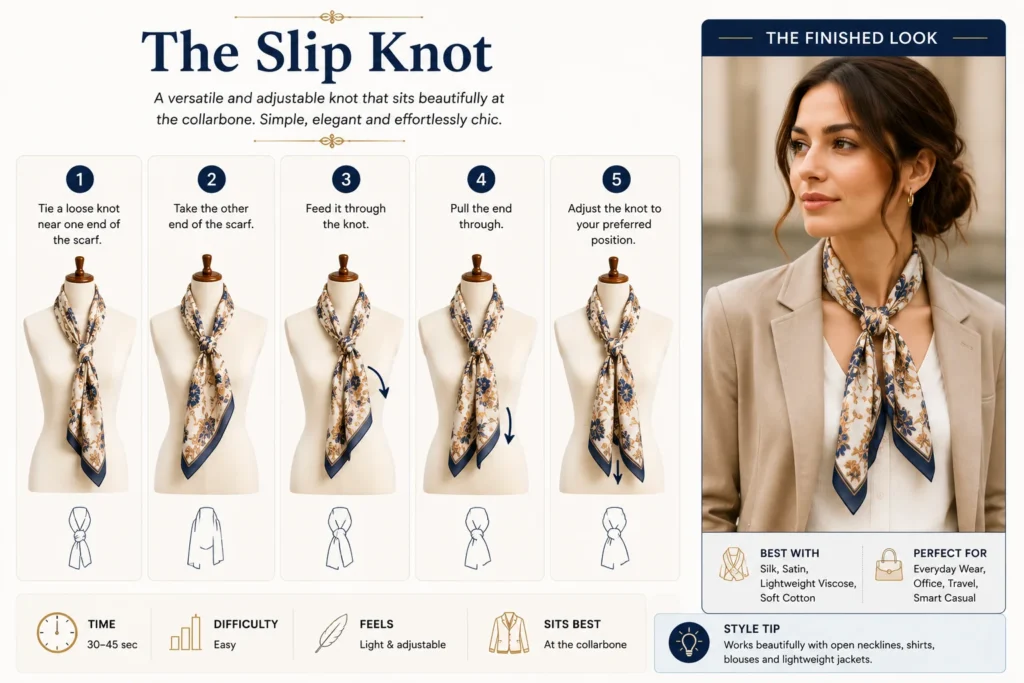
Tie a loose knot near one end, then feed the other end through it. Adjust so the knot sits exactly where you want on the collarbone.
4. The Classic Drape
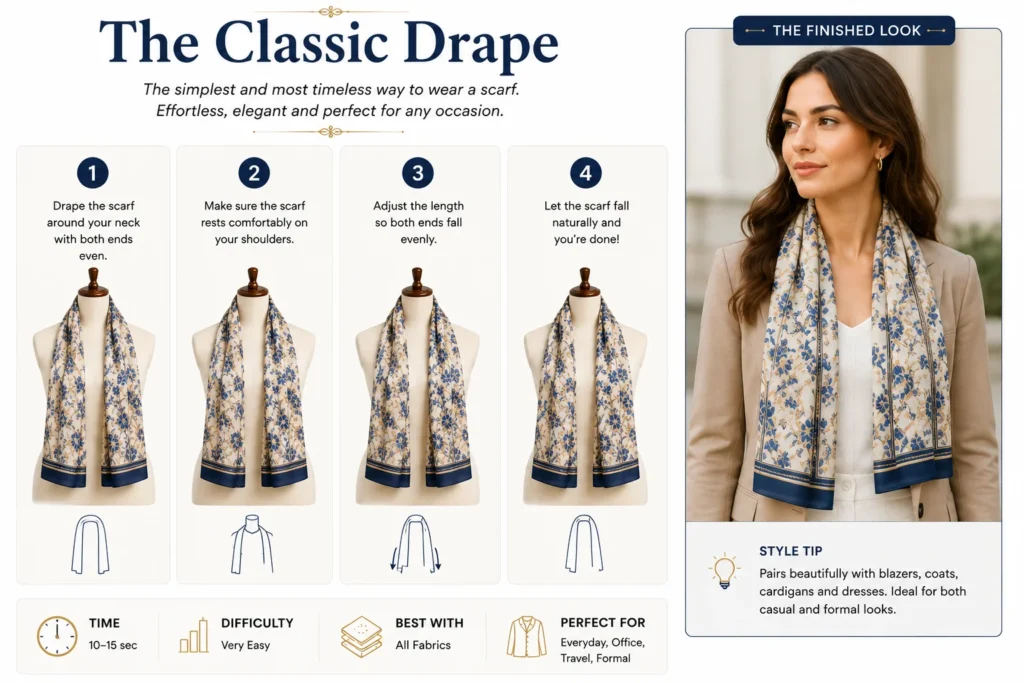
Simply lay the scarf around your neck with even lengths on both sides. Elegant with a coat or blazer and ideal for showing off printed silk designs.
5. The Overhand Knot
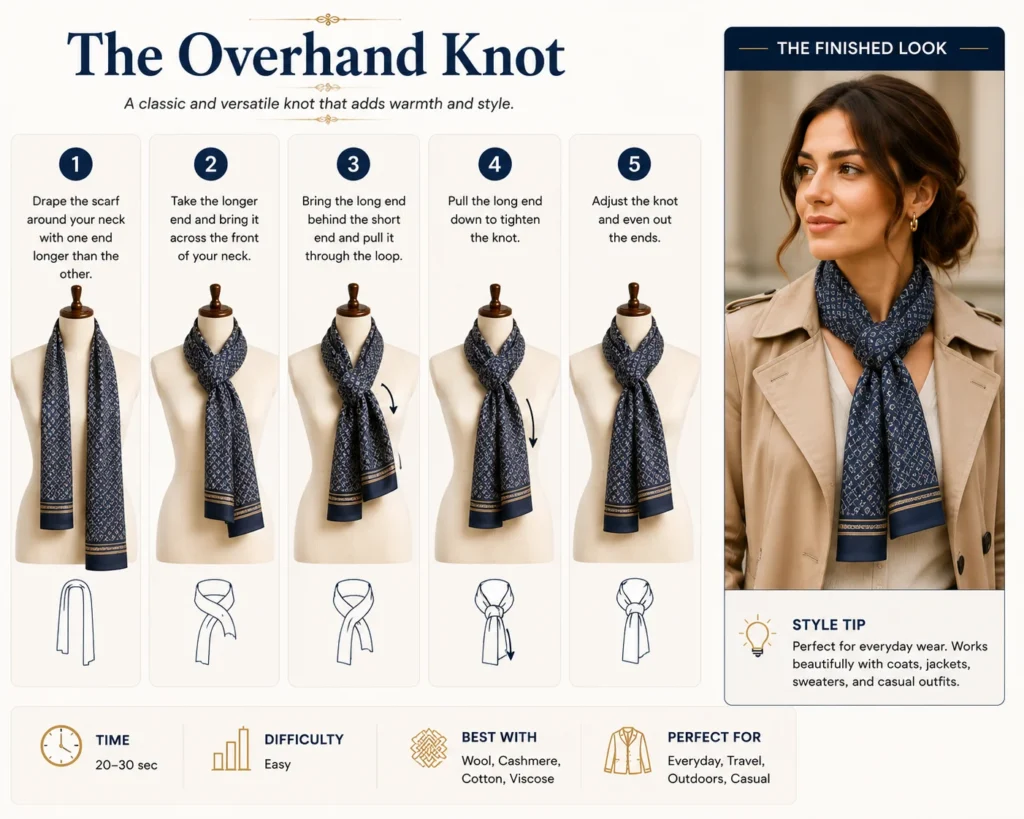
The most basic tie. One end over the other, pull tight, and let the tails fall naturally. Perfect for cotton and linen scarves in warmer weather.
Elegant and Sophisticated Styles
6. The Ascot
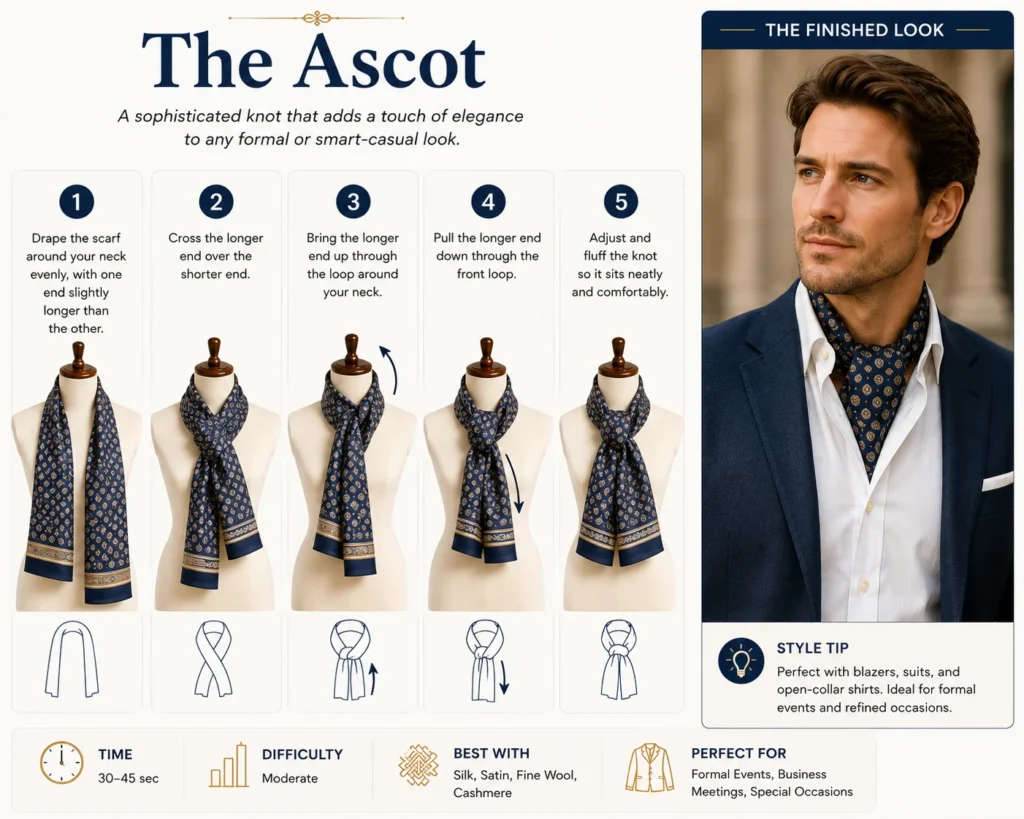
Cross both ends at the front, take one end over the top, and tuck it neatly into the collar of a shirt. A signature look for silk squares.
7. The Bow Tie Scarf
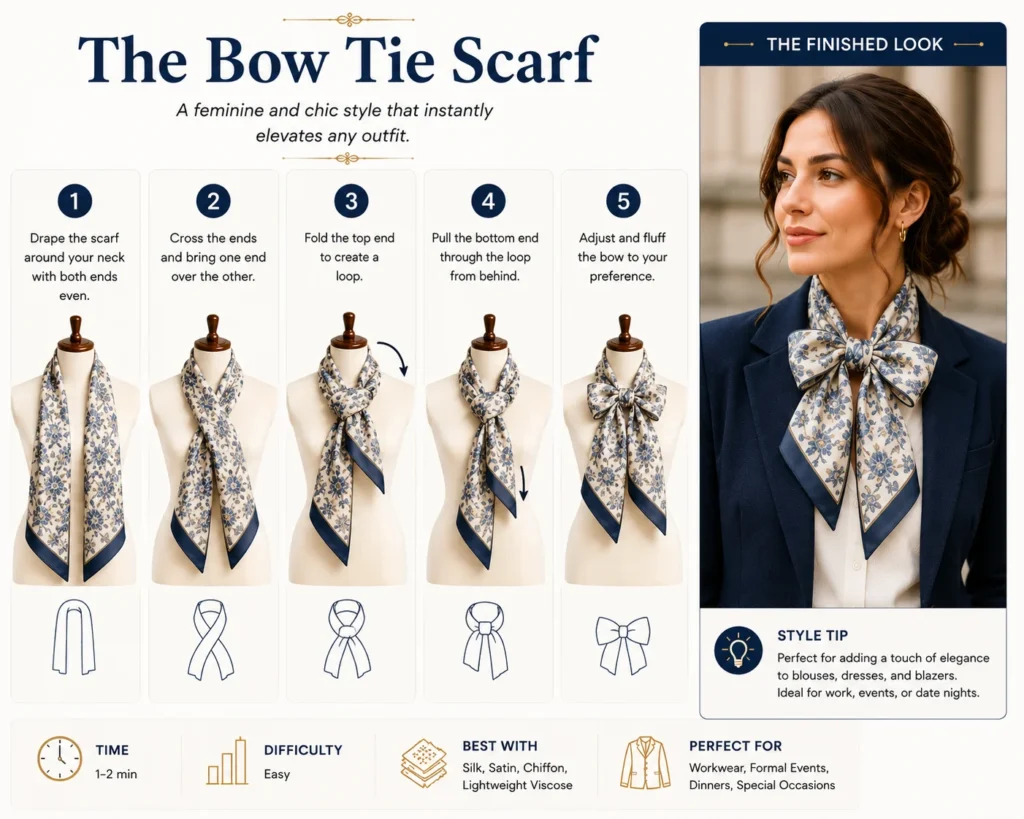
Tie the ends into a soft bow at the front of the neck. Works best with skinny silk scarves and adds a feminine, playful touch to blouses.
8. The Rosette
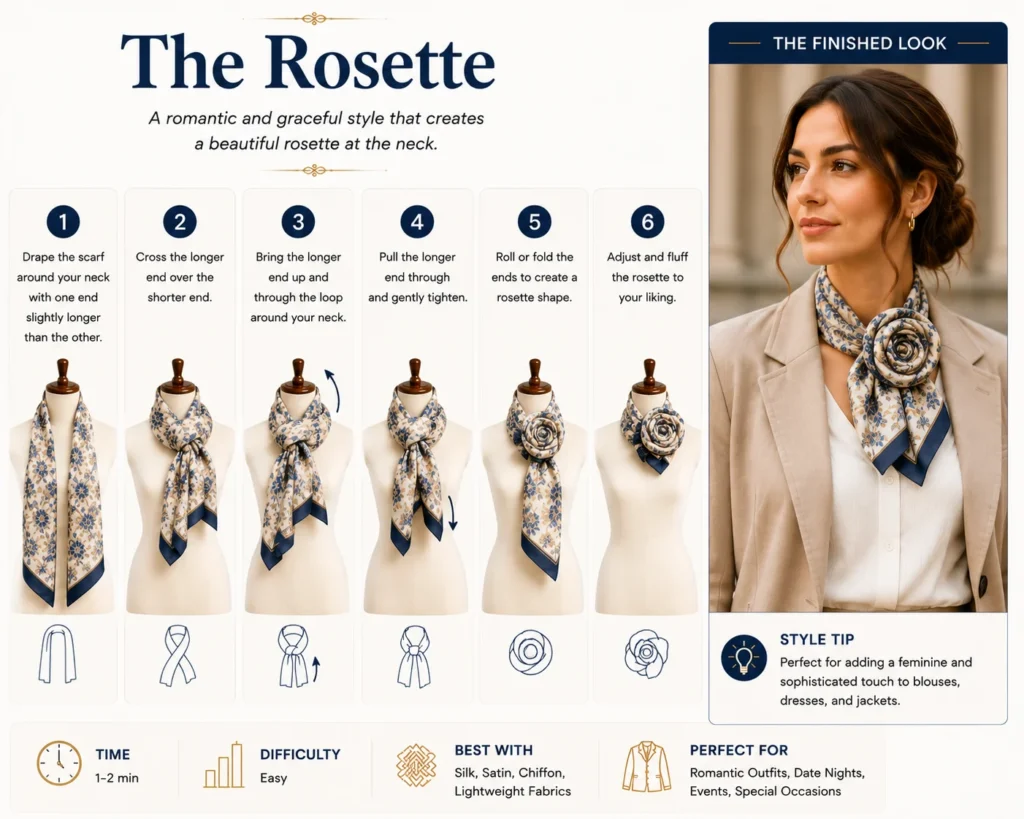
Twist the scarf into a rope, coil it into a spiral, and pin it to your shoulder or lapel. A statement finish for wedding wear, cocktail events, and evening looks.
9. The French Knot
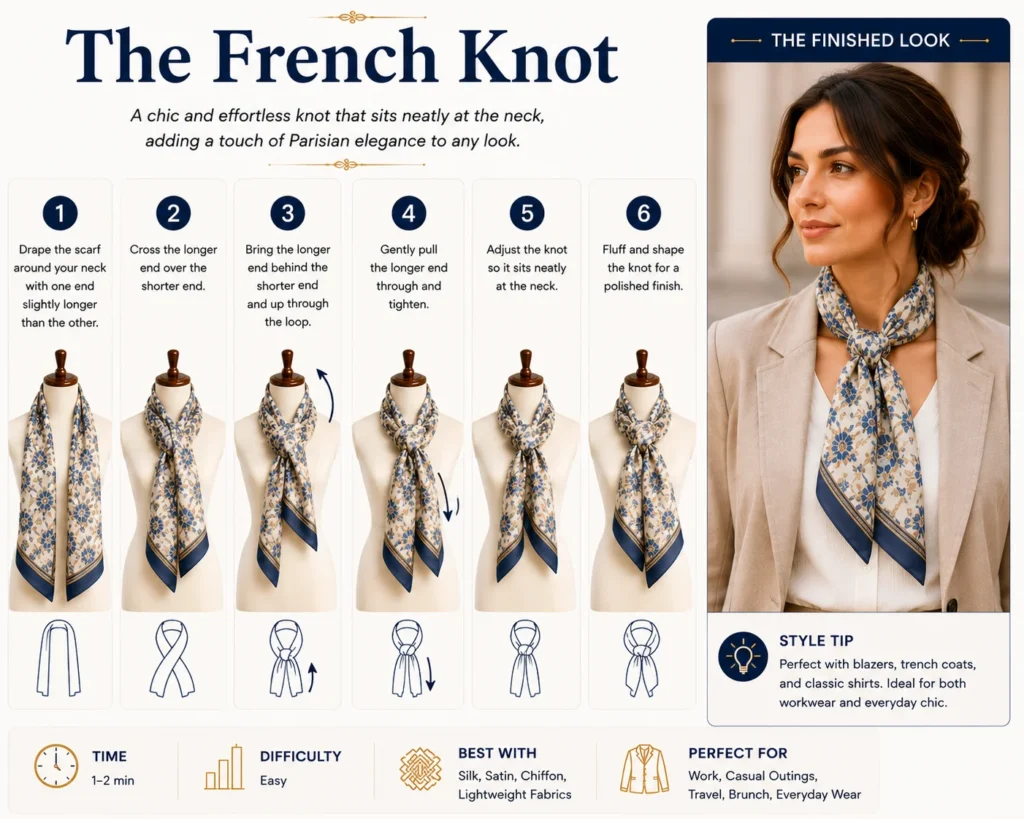
Fold the scarf in half, drape it, and pull one end through the loop, then the other. Creates a soft, sculpted look at the neckline.
10. The Twisted Wrap
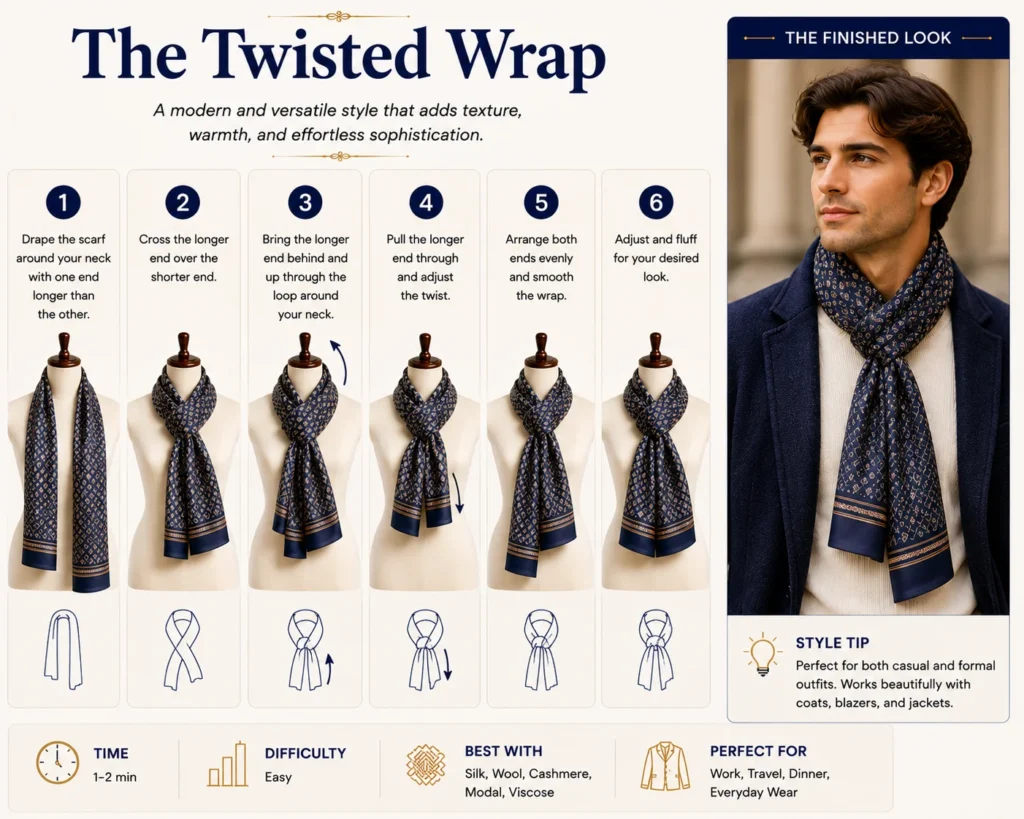
Fold the scarf lengthwise, twist it along its length, and wrap it once around the neck. Beautiful with textured wool or wool-silk blends from Bright Star’s premium range.
Casual and Everyday Wraps
11. The Loop and Pull
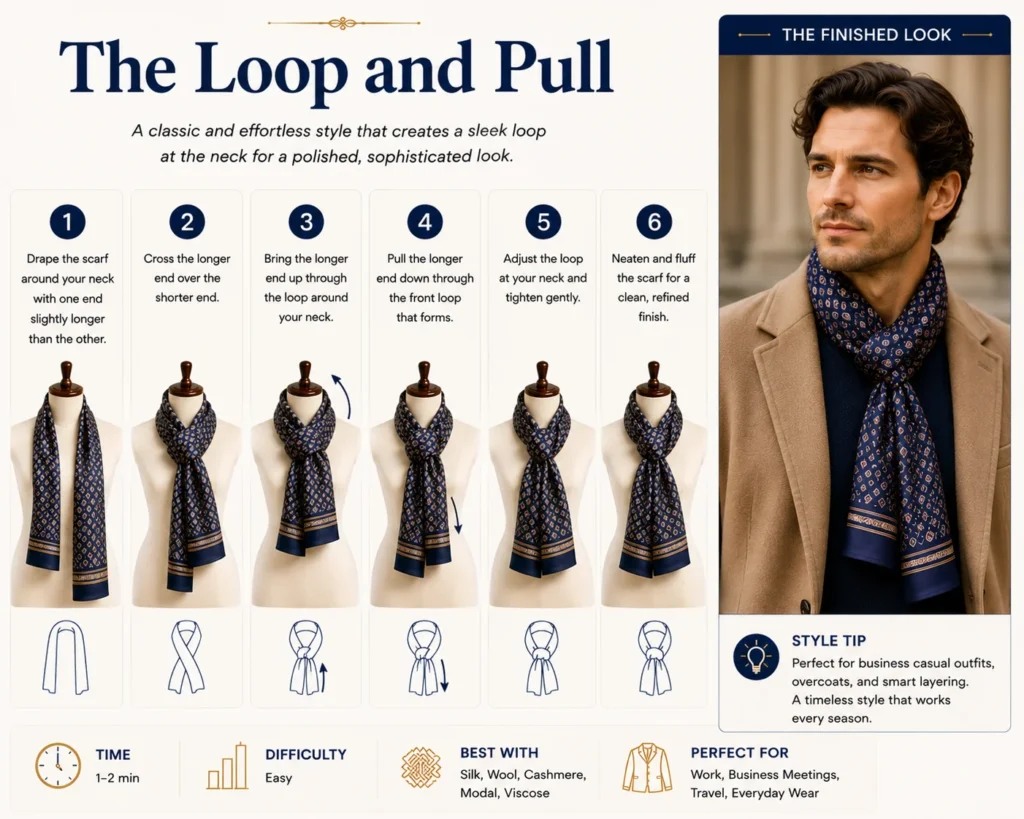
Loop the scarf twice around the neck and pull one end through both loops. Casual, warm, and ideal for oversized shawls on cold weekday mornings.
12. The Cowl Wrap
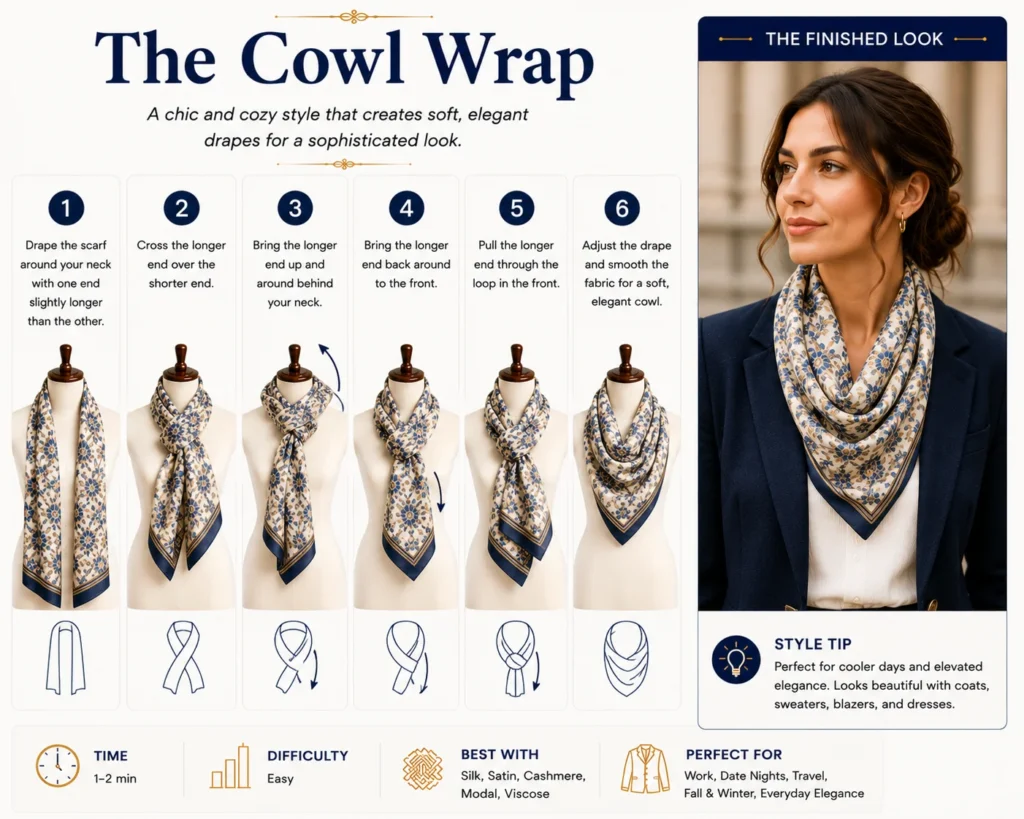
Wrap a long scarf multiple times around the neck to build a soft cowl effect. A staple for winter commutes and outdoor markets.
13. The Once-Around
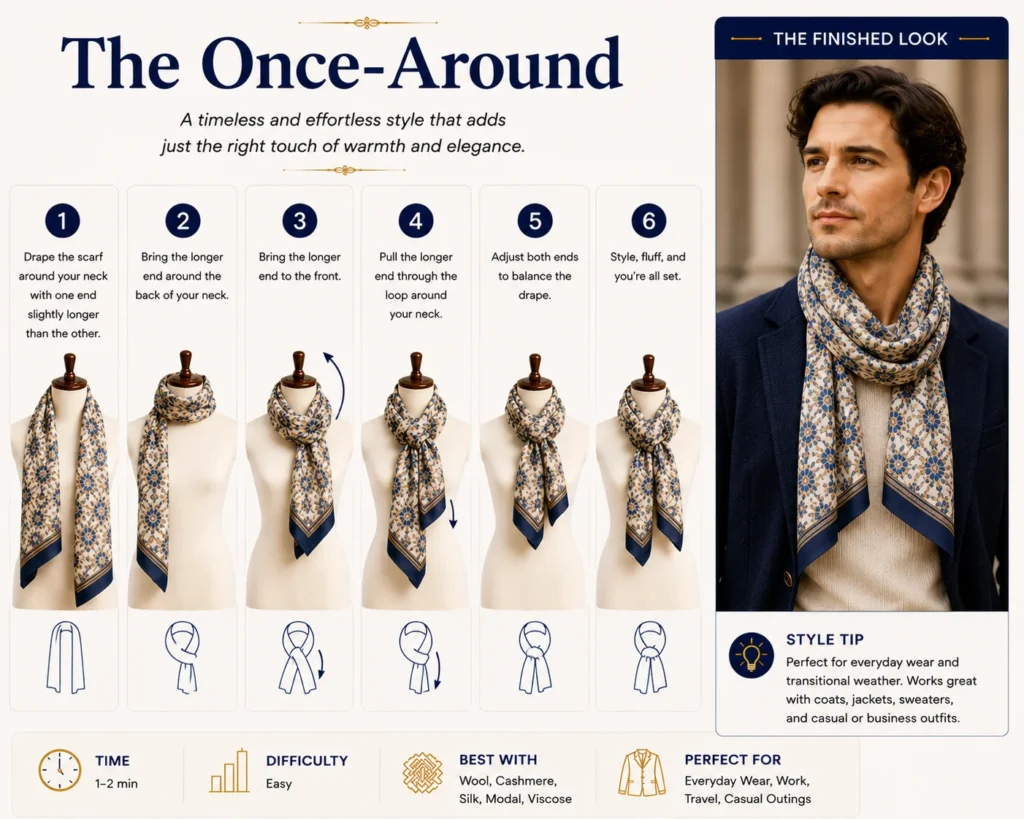
Drape and wrap once. Simple and undone in the best possible way, this suits chunky wool and cashmere pieces worn over roll necks and thick coats.
14. The Infinity Style
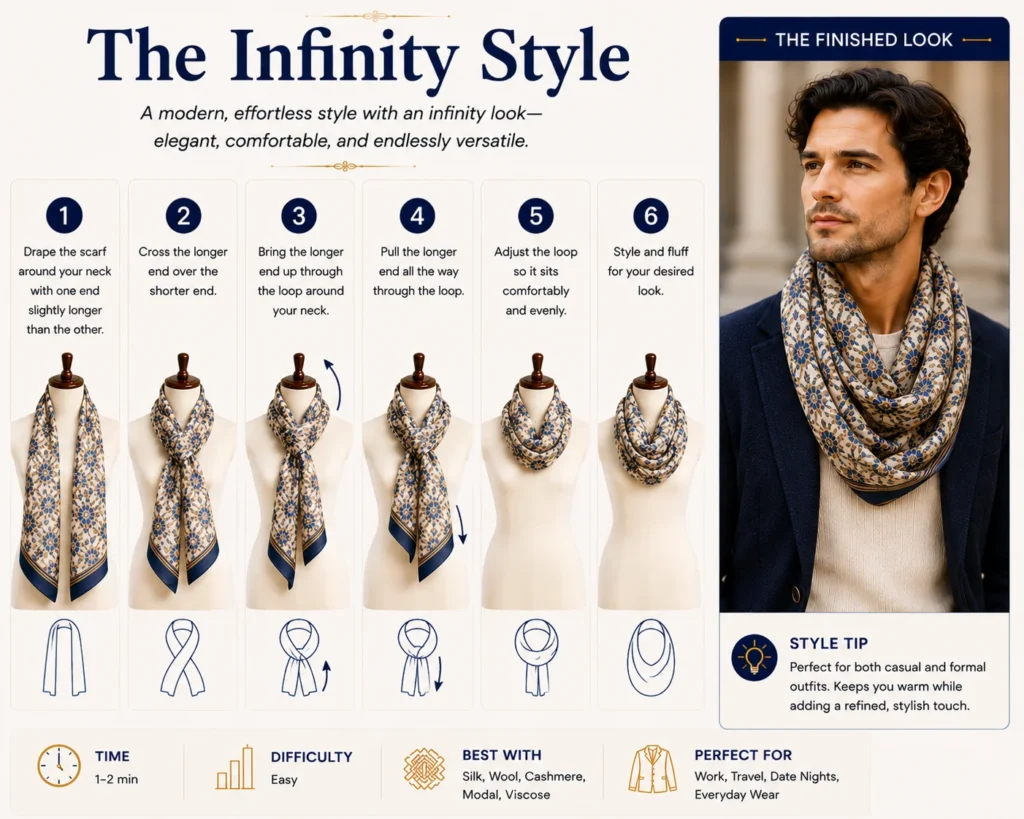
Knot the two ends of a rectangular scarf together, then loop it twice around the neck to mimic an infinity scarf. A clever hack while travelling light.
15. The Shoulder Drape
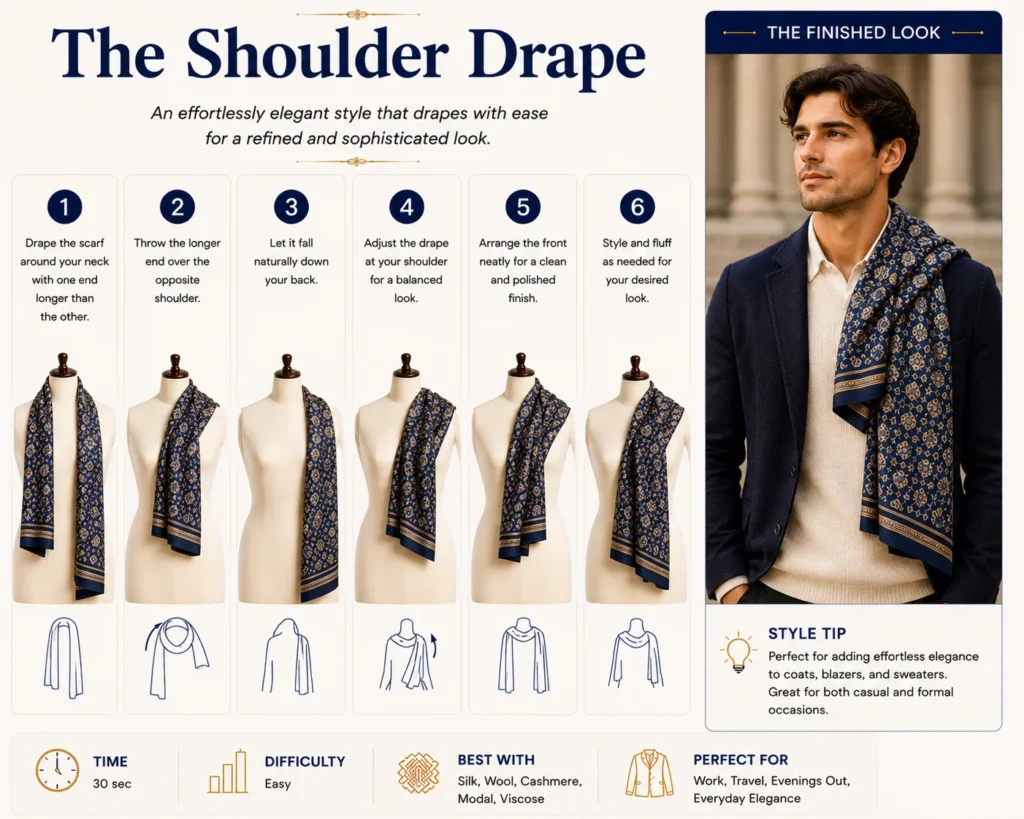
Lay a large scarf or shawl symmetrically over both shoulders like a cape. Warm, elegant, and effortless with evening dresses or open-back tops.
Statement and Creative Styles
16. The Turban Wrap
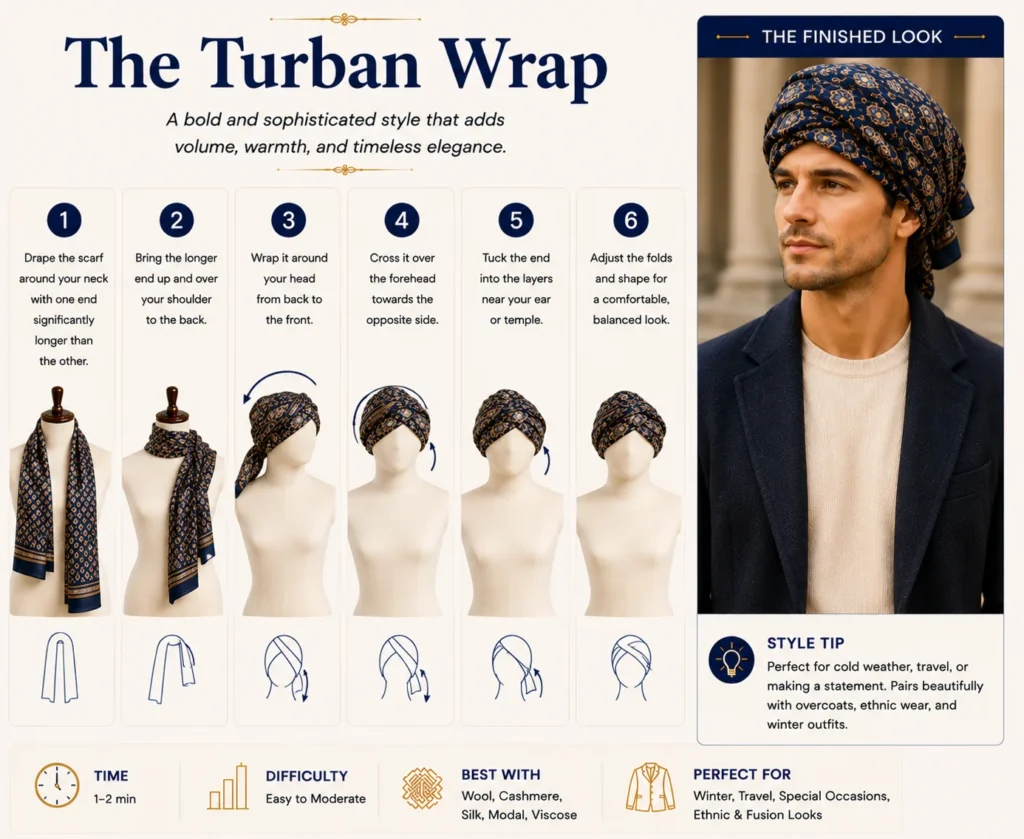
Wrap a long scarf around your head, cross the ends at the back, and tie them at the front. A striking look for summer travel, festivals, and beach days.
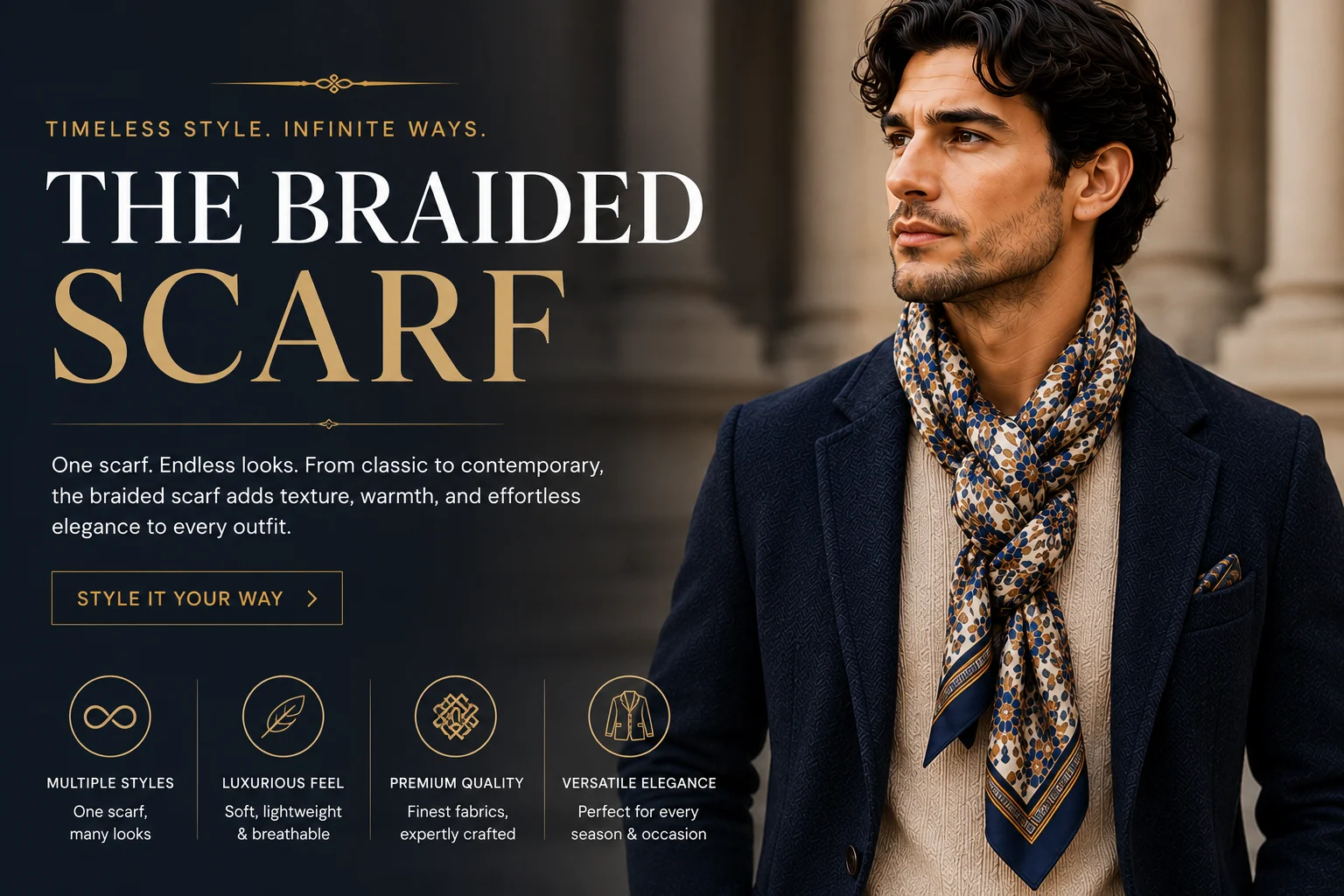
17. The Braided Scarf
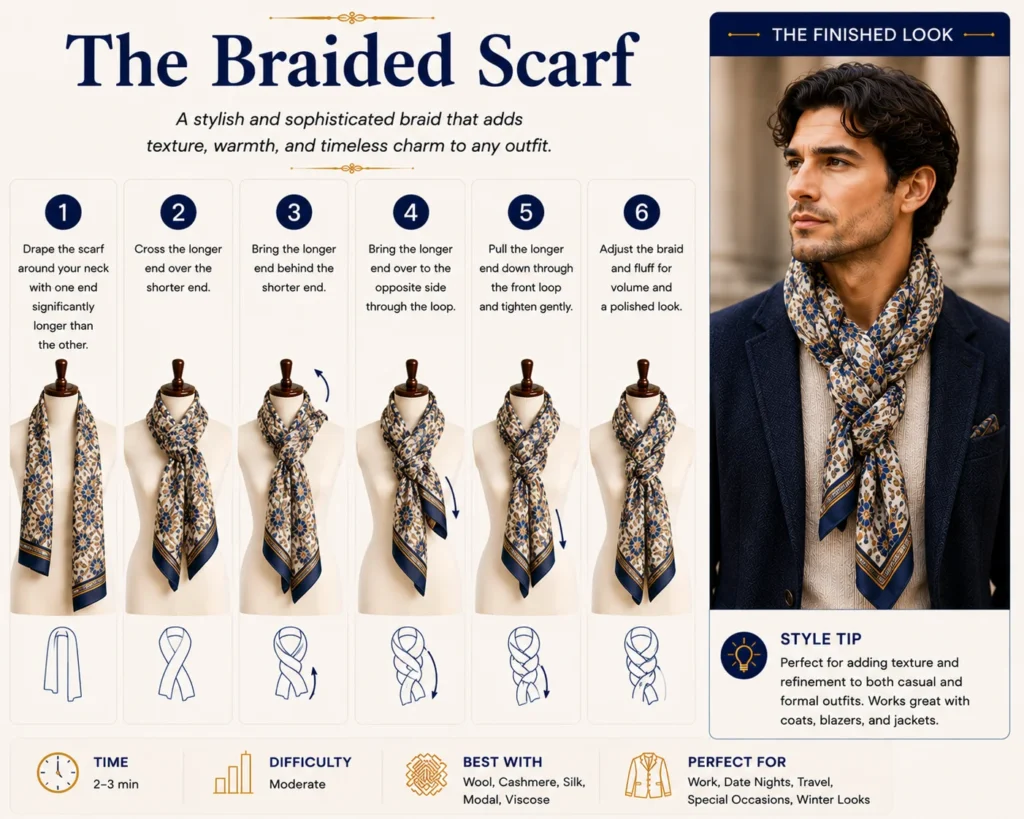
Fold a long scarf in half, pull the ends through the loop, then thread them through a second time to create a braided knot at the base of the neck.
18. The Belt Scarf
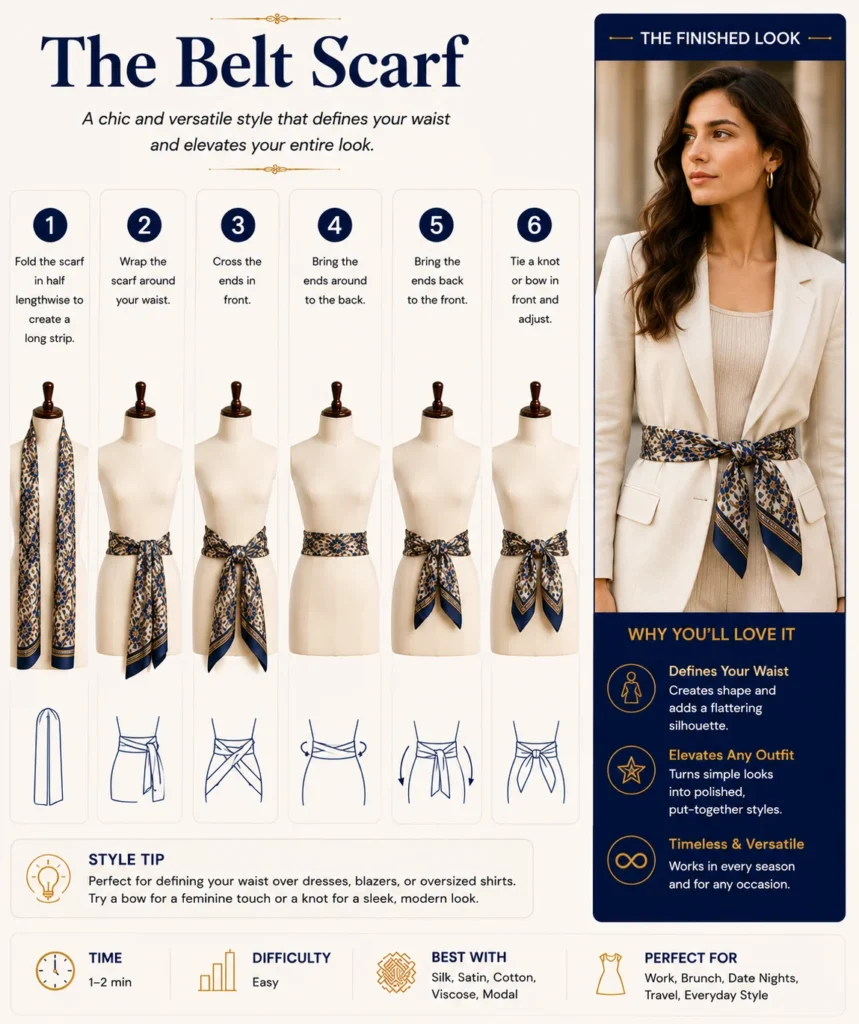
Skip the neck and thread a long, narrow scarf through your jeans or trousers instead. An easy way to add colour and pattern to an otherwise plain outfit.
19. The Vest Scarf
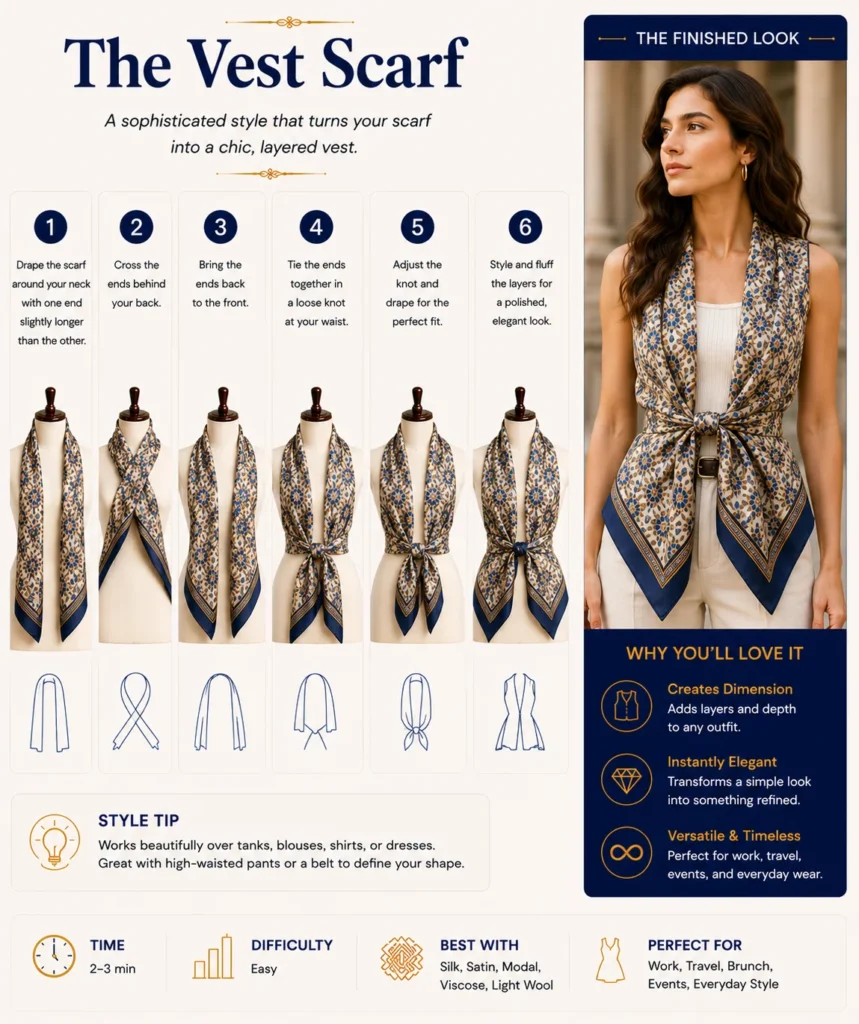
Take a very large square scarf, fold it into a triangle, and wrap it around your torso to create a light vest. Perfect for spring layering over a plain tee.
20. The Halter Wrap
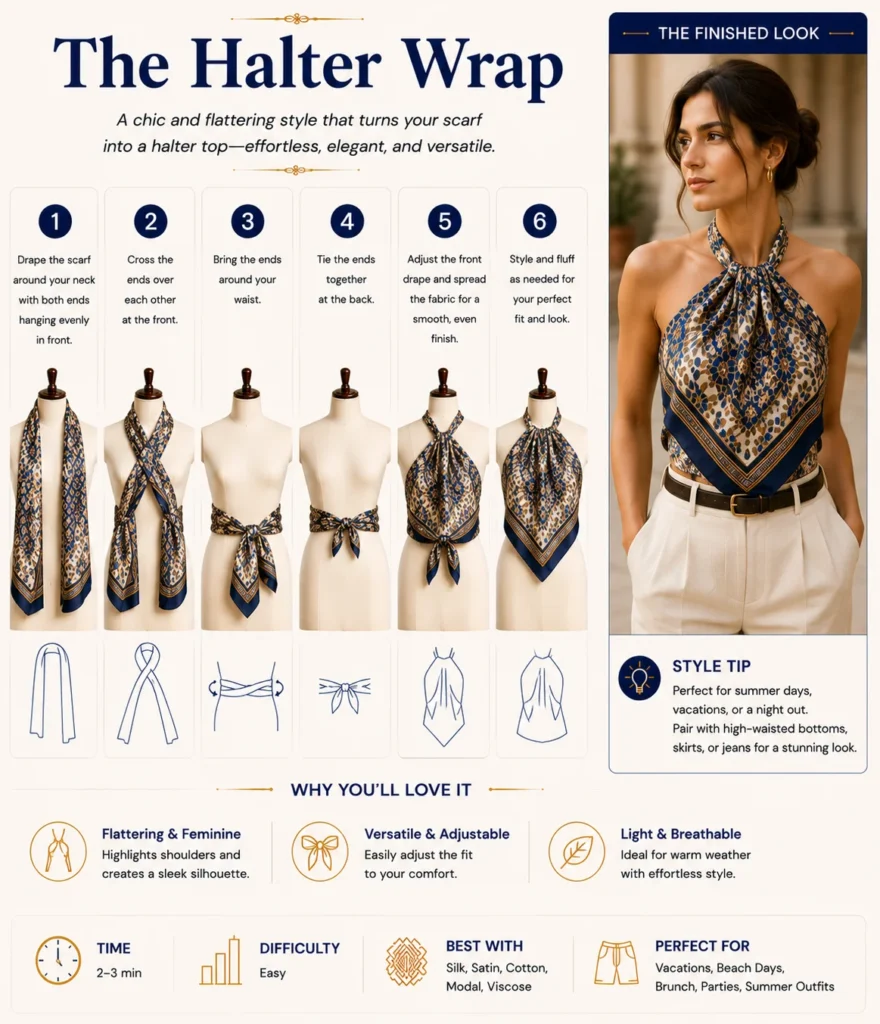
Fold a square scarf into a triangle and tie it behind your neck as a halter top. A summer favourite for beach clubs, poolside brunches, and resort wear.
Choosing the Right Scarf for Each Style
Not every fabric works for every knot. Here is a quick guide to help you match style to material and get a clean finish every time.
- Silk and satin scarves: Best for the Ascot, Parisian Knot, Bow Tie, and Rosette
- Wool and cashmere shawls: Ideal for the Cowl, Loop and Pull, Shoulder Drape, and Twisted Wrap
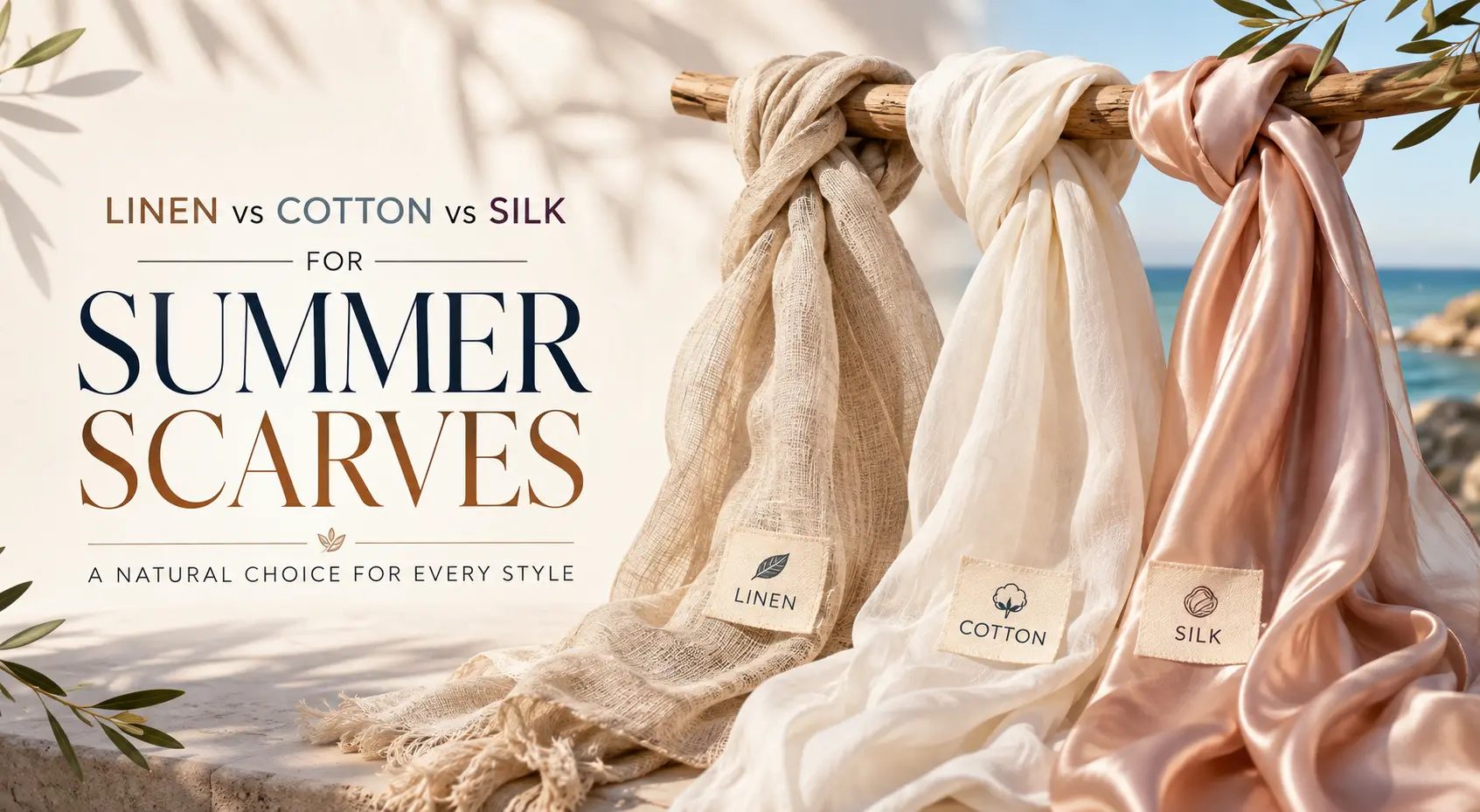
- Cotton and linen: Great for the Overhand, Turban, and Halter styles
- Viscose and blends: Versatile enough to try almost any knot in this guide
If you are buying in bulk for retail or private label, the Bright Star scarves and accessories range covers all four fabric families, produced at export standards for buyers across Europe, North America, Australia, and the Middle East.
Care and Styling Tips
A scarf is a small investment that lasts for years when treated well. A few habits go a long way:
- Store silk scarves rolled rather than folded to avoid deep creases
- Hang wool scarves loosely instead of stuffing them into drawers
- Iron on low heat with a cotton press cloth for delicate fabrics
- Wash cashmere and wool by hand, or use a trusted dry cleaner
- Rotate your knots so the fabric does not stress in the same spot repeatedly
Pair your scarf styling with equally considered home textiles. Bright Star also produces throws and cushion covers in matching fabrics, which is useful for retailers building a coordinated lifestyle range.
Bright Star’s Approach to Scarves
Since 1950, Bright Star has been manufacturing scarves, shawls, stoles, and home textiles from India for wholesale and export markets around the world. Our team works with buyers to develop custom prints, weaves, blends, and finishes, whether the order is 500 pieces for a boutique or 50,000 for a department store chain.
Every scarf that leaves our facility is designed to hold a knot beautifully, whether it is a soft silk square destined for a Parisian window display or a heavyweight wool wrap headed for a Toronto winter. That focus on drape, weight, and finish is why so many private label brands return to Bright Star season after season.
Ready to Build a Standout Scarf Collection?
Whether you are a retailer, private label brand, or boutique buyer, the right scarf collection starts with the right manufacturing partner. Bright Star produces scarves, stoles, and shawls in every fabric mentioned in this guide, tailored to your prints, colourways, and specifications.
Explore our full range at bright-star.co.in or reach out to our team for a wholesale quote today.
Frequently Asked Questions
What is the easiest way to tie a scarf for beginners?
The simple loop is the easiest scarf knot for beginners. Fold the scarf lengthwise, drape it around your neck, and pull the loose ends through the resulting loop for an instantly polished finish.
How long should a scarf be to tie multiple styles?
A scarf between 180 and 200 cm long works for most knots, including loops, wraps, cowls, and drapes. Longer stoles from Bright Star also allow shoulder wraps and infinity styles to be worn comfortably.
Can I tie a silk scarf the same way as a wool scarf?
Silk and wool scarves suit different knots because of their weight and drape. Silk holds neat, sculpted knots like the Ascot, while wool works better for cowl wraps and loose shoulder drapes.
What size scarf is best for the head or turban style?
For turban and head-wrap styles, choose a rectangular scarf around 70 by 180 cm. Cotton, viscose, and lightweight silk blends drape well and stay comfortable throughout the day.
How do I stop my scarf from slipping off my neck?
Choose a slightly textured fabric like wool, cashmere, or viscose. Tying a slip knot or French knot also helps grip the fabric and stops the scarf from sliding under a coat collar.
Are square scarves or rectangular scarves more versatile?
Rectangular scarves are more versatile overall, as they support loops, wraps, and cowls. Square scarves are essential for elegant styles like the Ascot, Rosette, and halter wrap looks.
What is the difference between a stole, a shawl, and a scarf?
Stoles are long and narrow, shawls are wider and heavier for warmth, and scarves are the most compact of the three. Bright Star manufactures all three formats for wholesale and export buyers.
Can men use these scarf-tying styles too?
Yes, most of these knots work beautifully for men, especially the simple loop, Parisian knot, once-around, and overhand knot. Choose neutral tones and textured fabrics for a masculine finish.
How should I clean and store printed silk scarves?
Hand-wash printed silk scarves in cold water with a mild detergent, air-dry them flat, and store them rolled in tissue paper. Avoid direct sunlight to preserve colour vibrancy over time.
Where can wholesale buyers source high-quality scarves from India?
Bright Star has been manufacturing scarves, stoles, and shawls at export standards in India since 1950. Buyers can request custom prints, blends, and flexible minimum orders directly through the Bright Star website.