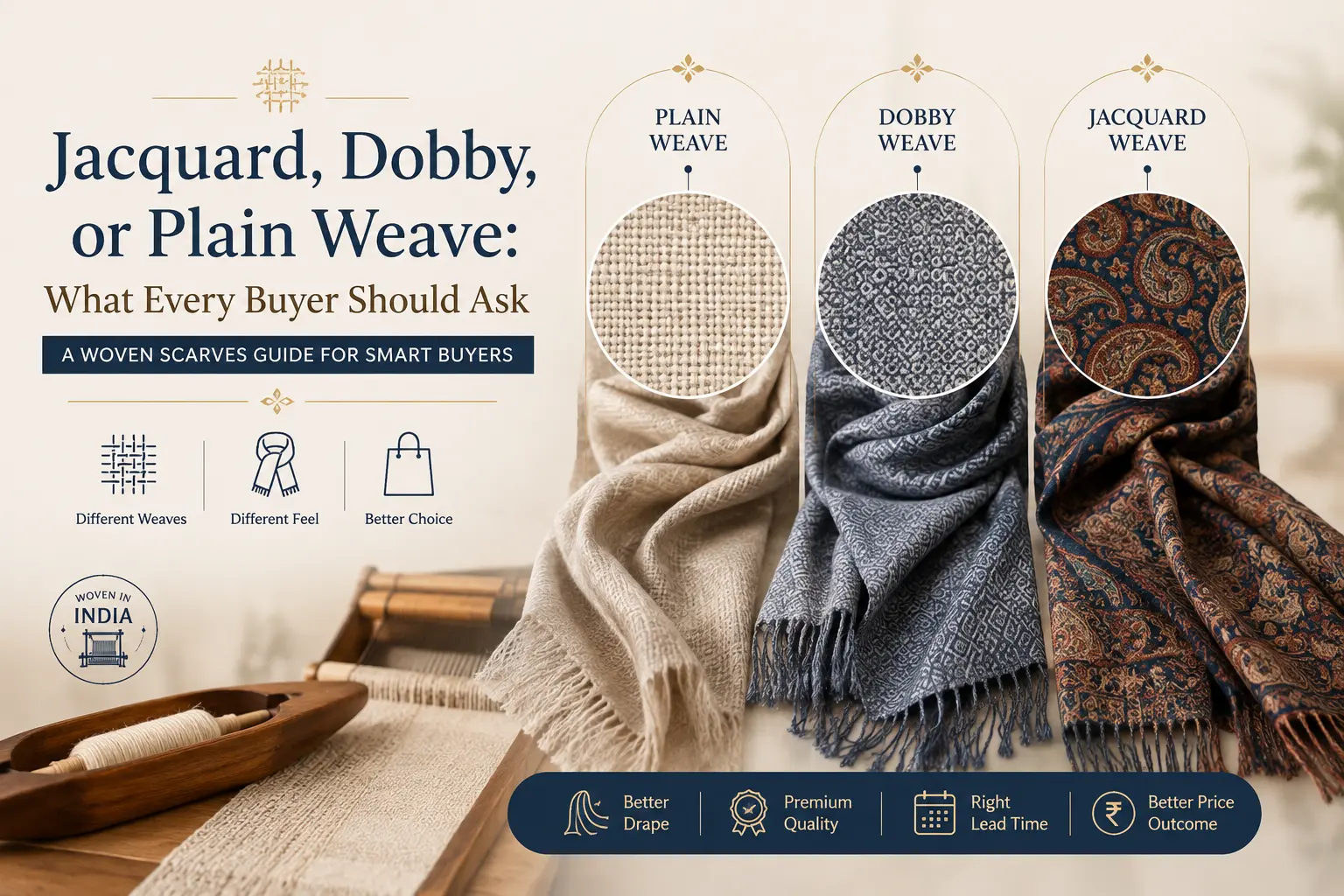
Two woven scarves can share the same yarn, the same colour, the same measurements, and still feel completely different in the hand. One drapes softly and folds against a coat lapel. The other sits stiffly, refuses to knot cleanly, and slides straight off the shelf into the returns pile.
The difference is almost always the weave.
Weave structure is the least discussed variable in scarf sourcing and probably the most consequential. It decides drape, price, pattern complexity, lead time, and whether your bulk actually matches the sample you signed off on. This blog is the short, honest breakdown a woven scarves manufacturer in India would give you if you had twenty minutes with them before finalising your first order.
Why Weave Choice Decides Drape, Price, and Shelf Appeal
Yarn gives the scarf its fibre character. Weave gives it its physical behaviour. A silk yarn woven in plain weave feels light and papery. The same silk yarn woven as a dobby feels textured and matte. Woven as a jacquard, it becomes a figured surface with weight and pattern depth.
That single variable, weave structure, controls:
- How the scarf drapes on the body
- How it takes colour and print
- What patterns you can build into the fabric itself
- What the finished cost looks like at wholesale
- Whether the design can be produced at your MOQ or needs a higher run
Three weave families dominate the woven scarves category from India: plain weave, dobby, and jacquard. Each fits a different retail slot. Getting the choice wrong at the sample stage is why buyers occasionally receive bulk that “looks fine but feels off.”
The Three Weave Types at a Glance
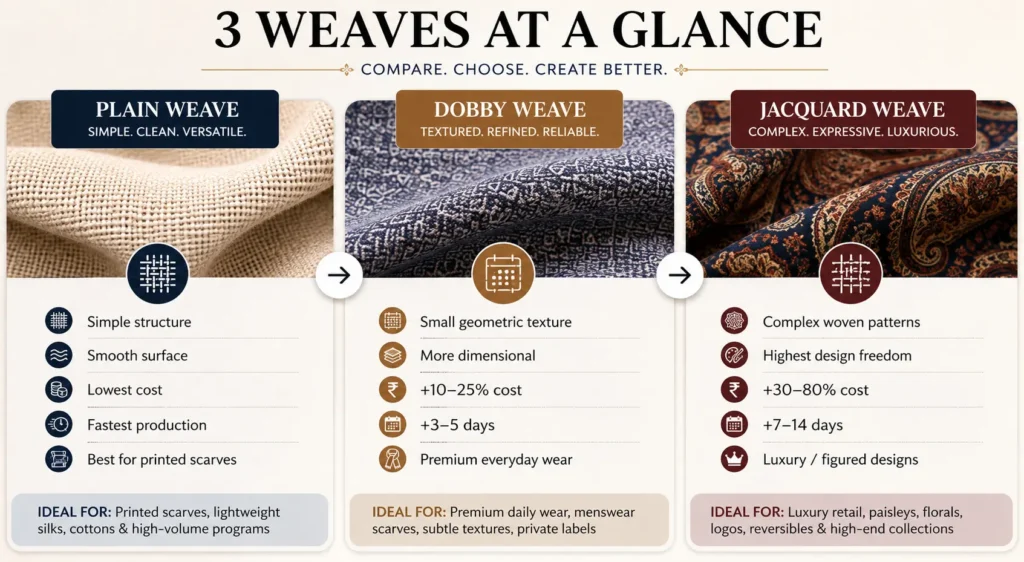
Before the detail, here is the comparison every buyer should have on the desk.
| Weave | Pattern Complexity | Loom Type | Wholesale Price Impact | Lead Time Impact | Best For |
|---|---|---|---|---|---|
| Plain | Solid or stripes only | Basic frame loom | Baseline | Standard | Printed scarf bases, lightweight silks, promotional |
| Dobby | Small geometric textures | Dobby attachment loom | +10 to 25 percent | +3 to 5 days | Premium daily wear, quality menswear |
| Jacquard | Unlimited figured designs | Jacquard head loom | +30 to 80 percent | +7 to 14 days | Luxury retail, paisleys, brand logos |
Price and time impacts are compared against plain weave at similar yarn and finish specifications.
Plain Weave: The Base Fabric That Suits Every Print
Plain weave, also called tabby, is the simplest structure in weaving. Warp and weft threads interlace one over, one under, alternating across the full width. Both sides of the fabric look identical.
Where plain weave wins:
- Base fabric for printed scarves (digital, screen, or block print)
- Lightweight silks and viscose scarves that need clean drape
- Cotton and linen summer scarves
- Promotional and entry-price retail
- High-volume programmes where speed matters
Plain weave is the fastest and cheapest to produce, which is why almost every printed scarf sitting on retail today starts with a plain weave base. It is also the most forgiving with digital print because the surface is uniform.
Where plain weave falls short: no woven pattern is possible. Any surface interest has to come from print or embroidery added later. If your design needs texture, weight, or structural pattern, plain weave is not the answer.
Dobby Weave: The Middle Ground That Adds Quality Signals
Dobby is the workhorse weave for premium daily wear. A dobby attachment on the loom controls between 16 and 40 warp shafts individually, letting the weaver build small repeating patterns directly into the fabric. Think waffle textures, small honeycomb grids, mini diamonds, pinstripes with texture, and small geometric checks.
Pattern repeat on dobby is limited to roughly 16 to 24 warp threads, so no big florals or complex figures are possible. What you get instead is a fabric surface with body and dimensionality that shoppers can feel before they look at the price tag.
Where dobby wins:
- Premium wool and cashmere daily-wear scarves
- Quality menswear scarves with subtle texture
- Cotton and linen scarves for warm-climate retail
- Small-pattern private label programmes
- Buyers who want a “not just a printed scarf” positioning at moderate cost uplift
Dobby is the weave choice most department store buyers reach for when they want the fabric itself to signal quality. It costs about 10 to 25 percent more than plain weave and adds only three to five days to the production cycle.
Jacquard Weave: The Unlimited Canvas for Figured Design
Jacquard is where woven scarves become a design surface with no limits. A jacquard head controls each warp thread individually, using 500 to 2,000 or more hooks depending on the loom. That means any figured design, whatever the pattern size, colour count, or complexity, can be built into the fabric itself.
Jacquards are where you get:
- Traditional paisley scarves
- Floral figured designs
- Brand logos woven into the fabric
- Damasks and traditional figured patterns
- Multi-colour scarves with pattern depth on both sides
- Reversible designs
The trade-off is time and cost. Every jacquard design needs a CAD file converted into a loom instruction file. The loom setup for a new design takes hours. Production runs slower because more mechanical work happens per pick. And any change to the pattern means rebuilding the loom file.
Where jacquard wins:
- Luxury retail scarves at premium price points
- Heritage and paisley designs from the woven jacquard scarves and shawls category
- Brand-logo scarves for corporate and fashion houses
- Cashmere, silk, and fine wool scarves where design complexity justifies the cost
Wholesale cost uplift for jacquard versus plain weave runs 30 to 80 percent depending on design complexity and yarn count. Lead time typically adds seven to fourteen days.
The 12 Questions Every Buyer Should Ask Before Confirming a Sample
Once you know which weave family fits your programme, the sample conversation gets specific. These are the twelve questions that separate a smooth first order from a bulk that misses the sample.
- Which weave suits my design intent and target market? Ask the manufacturer to justify the recommendation with a shelf reference.
- What is the yarn count and GSM? These decide weight, drape, and warmth.
- Which loom will run this order? Handloom, powerloom, dobby, or jacquard, and at what width?
- What is the maximum pattern repeat possible? Critical for dobby and jacquard.
- How many colours can the weave hold? Jacquards handle more; dobbies are limited.
- What is the selvedge and hem plan? Woven selvedge, hand-rolled hem, or machine hem.
- Can this design be produced at my MOQ? Complex jacquards often need higher runs.
- What is the expected shrinkage margin post finishing? Two to five percent is typical.
- What is the sample cost and how many revisions are included? Confirm before starting.
- What is the lead time impact versus plain weave? Budget realistically.
- Can I see the CAD or point paper before physical sample? Faster feedback loop.
- What certifications and testing apply to this weave and yarn? OEKO-TEX, GOTS, RWS as needed.
Any woven scarves manufacturer in India worth working with will answer all twelve in writing before touching the loom. A supplier who dodges half of these is a supplier who will surprise you at the bulk stage.
How Weave Choice Affects Cost, MOQ, and Lead Time
Plain, dobby, and jacquard sit on a rising cost and complexity curve. Here is the practical impact for a buyer planning a wool scarf programme.
- Plain weave: MOQ from 300 pieces. Baseline pricing. Standard 60 to 90 day cycle.
- Dobby weave: MOQ from 500 pieces per design. Plus 10 to 25 percent on cost. Plus 3 to 5 days.
- Jacquard weave: MOQ from 800 to 1,000 pieces per design due to setup amortisation. Plus 30 to 80 percent on cost. Plus 7 to 14 days.
For repeat orders on already-set jacquard files, the MOQ and cost premiums drop, because the loom setup has already been amortised. This is why brands with a proven jacquard design often place larger repeat runs rather than developing new patterns each season.
Which Weave Suits Which Product Category
Weave decisions do not stop at scarves. The same logic applies across the wider category.
- Scarves and stoles: Plain for printed designs, dobby for premium daily wear, jacquard for luxury figured designs.
- Shawls: Dobby and jacquard dominate winter shawl retail. Paisleys and figured wool designs are almost always jacquard.
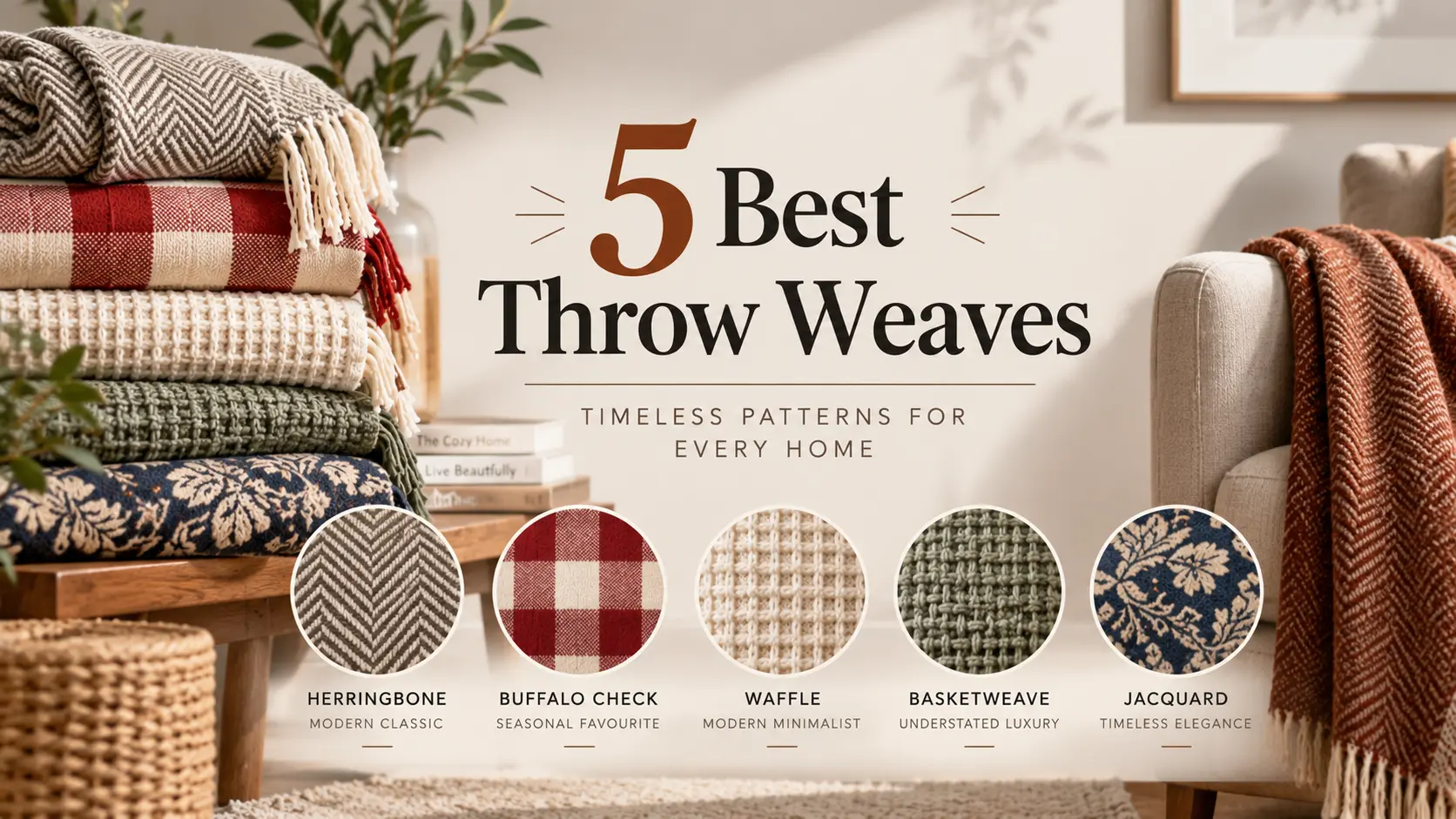
- Throws and plaids: Dobby weaves handle buffalo checks and herringbones. Jacquard is used for complex home textile designs. Plain weave works for reversible flat-woven throws. The throws collection uses all three depending on retail slot.
- Cushion covers: Jacquard leads in premium home retail. Dobby handles textured mid-tier cushions. Plain weave suits printed cushion programmes at volume. The decorative cushion covers range covers the full weave spectrum.
If you are building a coordinated buy across categories, weave choice is one of the fastest levers for keeping the range visually cohesive.
Working with Bright Star
Bright Star has been weaving scarves, shawls, throws, and cushion covers from India since 1950. Three generations of loom experience across handloom, powerloom, dobby, and jacquard means the mill can specify the right weave for your design intent and price point on the first call.
For buyers developing custom paisleys, brand logos, or original figured designs, in-house Custom Design and Private Label capability shortens the sampling loop meaningfully. Reach out through the Bright Star team with a design brief, and a first weave recommendation lands within seven days.
Frequently Asked Questions
What is the difference between jacquard and dobby weave in scarves?
Jacquard controls every warp thread individually and handles unlimited figured designs. Dobby controls small groups of warp shafts and produces only small geometric or textured patterns of limited repeat size.
Which weave gives the softest drape in a woven scarf?
Plain weave typically gives the softest drape at similar yarn counts because it has the fewest interlacings per inch. Dobby and jacquard add structural body that reduces drape but adds shelf-appeal weight.
What is the minimum order quantity for jacquard woven scarves from India?
Jacquard MOQs usually start at 800 to 1,000 pieces per design due to loom setup costs. Repeat orders on existing jacquard files can drop as low as 300 pieces per colourway.
Can a plain weave scarf be printed easily?
Yes. Plain weave is the preferred base fabric for digital and screen printed scarves. The uniform surface takes ink cleanly, holds registration well, and produces the sharpest print definition compared to textured weaves.
What is the lead time impact of choosing jacquard over plain weave?
Jacquard typically adds seven to fourteen days versus plain weave. The extra time covers CAD file preparation, loom setup, sample weaving, and slower production speeds per pick during bulk manufacturing.
Which weave is best for wool scarves in premium daily wear?
Dobby weave suits premium daily wear best. It adds subtle texture and quality signals at moderate cost, keeps drape close to plain weave, and works cleanly with fine merino and lambswool yarns.
Do handloom and powerloom scarves differ in weave options?
Both looms support plain, dobby, and jacquard weaves. Handloom offers finer detail control and traditional character. Powerloom offers speed, consistency, and lower per-piece cost at higher volumes.
What certifications should a woven scarves manufacturer in India offer?
Standard certifications include OEKO-TEX for chemical safety, RWS for responsible wool sourcing, GOTS for organic cotton, and GRS for recycled fibre content in wool and blend programmes.
Can I develop a custom jacquard design with my own artwork?
Yes. Custom jacquard designs are standard for private label buyers. Provide press-ready artwork or design references, and the manufacturer converts the file into a jacquard loom instruction with sample production.
Which weave suits reversible scarf designs?
Jacquard is the strongest choice for reversible scarves because the pattern shows on both faces with contrasting colours. Some plain weaves also reverse cleanly, but pattern depth is limited to yarn colour changes only.