

Most cashmere scarves are not ruined by wearing them. They are ruined in a single wash: water a little too hot, a twist to squeeze it dry, or a fast spin with a pair of jeans. Ten minutes later, the scarf feels thick, stiff, and two sizes smaller.
The good news is that cashmere is washable. Done correctly, a gentle wash leaves it softer, because it rinses away the body oils and dust that flatten the fibre. Here is how to wash, dry, de-pill, and store it, explained from the manufacturing side.
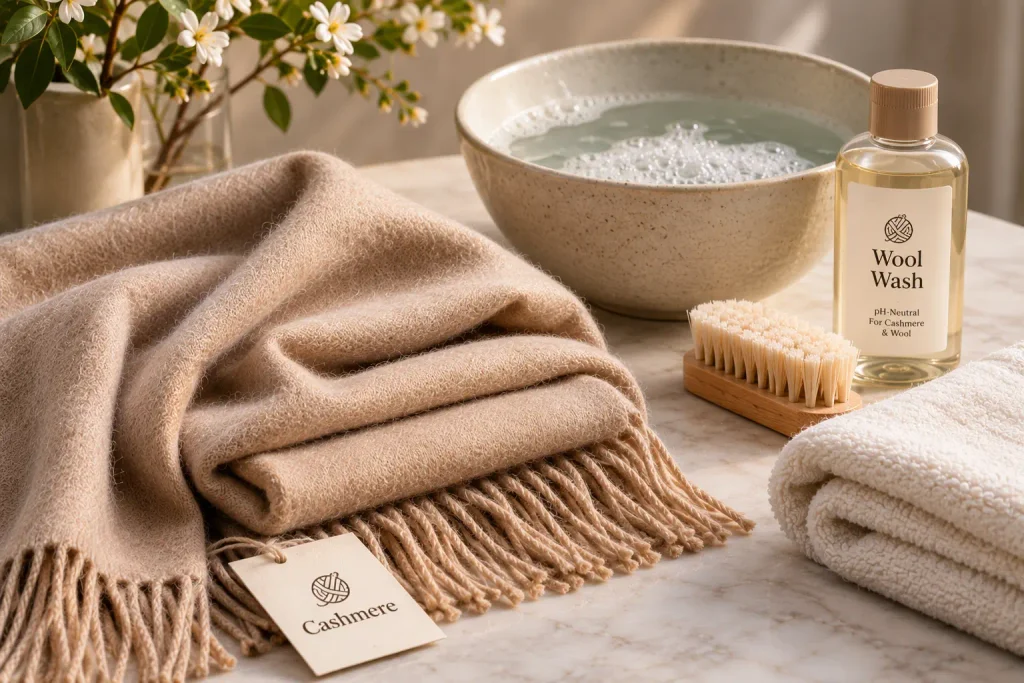
The Short Answer: How to Wash a Cashmere Scarf
If you only need the essentials, these six rules cover almost every situation:
- Hand wash in cool water, below 30°C
- Use a pH-neutral wool or cashmere wash, or a mild baby shampoo
- Soak for about 10 minutes and swish gently; never rub or scrub
- Rinse in water of the same temperature to avoid shocking the fibre
- Press water out with a towel; never wring or twist
- Dry flat in the shade, away from radiators, heaters and direct sun
Why Cashmere Shrinks: What Happens Inside the Fibre
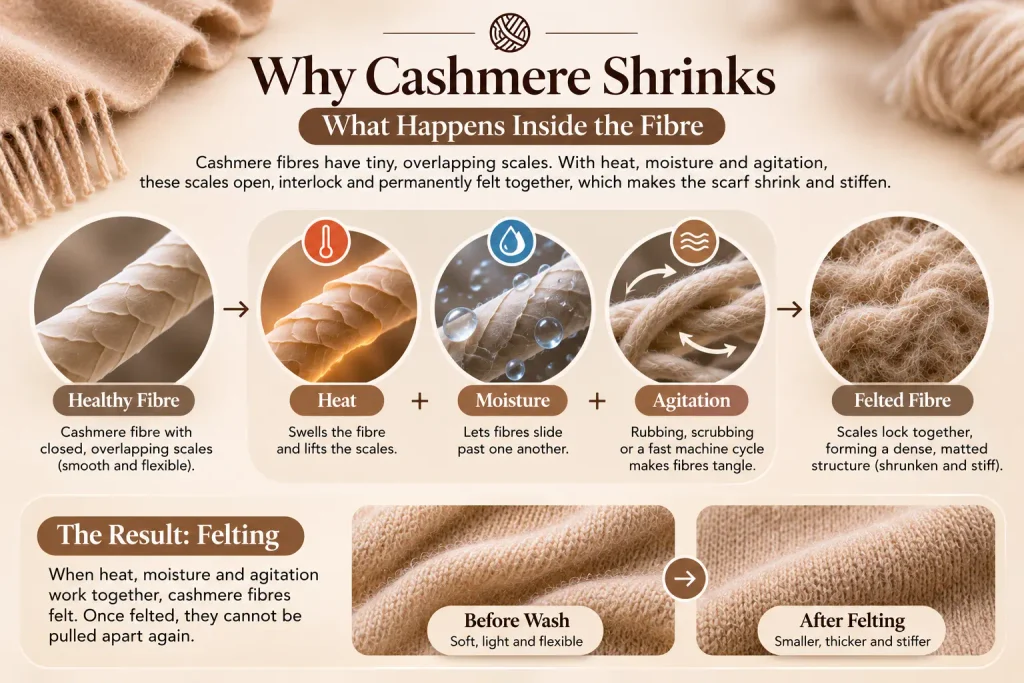
Cashmere comes from the soft undercoat of cashmere goats. Like all animal hair, each fibre is covered in tiny overlapping scales, a little like roof tiles.
When three things happen together, the scales open, hook into neighbouring fibres and lock tight:
- Heat, which swells the fibre and lifts the scales
- Moisture, which lets fibres slide past one another
- Agitation, such as rubbing, scrubbing or a fast machine cycle
This process is called felting. Once fibres have felted, you can’t pull them apart again, which is why a felted scarf stays small and stiff.
Cashmere is especially vulnerable because its fibres are extremely fine, usually around 14 to 19 microns, and scarf yarns are spun loosely for softness. Loose, fine fibres move and tangle easily.
Detergent matters too. Many laundry detergents contain enzymes that break down protein stains. Cashmere is itself a protein, so those enzymes slowly thin the scarf.
How Often Should You Wash a Cashmere Scarf?
Far less often than most people think, because animal fibres naturally resist odour.
- Air it out for a day after wearing instead of washing it
- Spot clean small marks with a damp cloth and a drop of wool wash
- Wash fully after roughly five to six wears in heavy winter use
- Always wash before storing it away for the warm months
How to Hand Wash a Cashmere Scarf, Step by Step
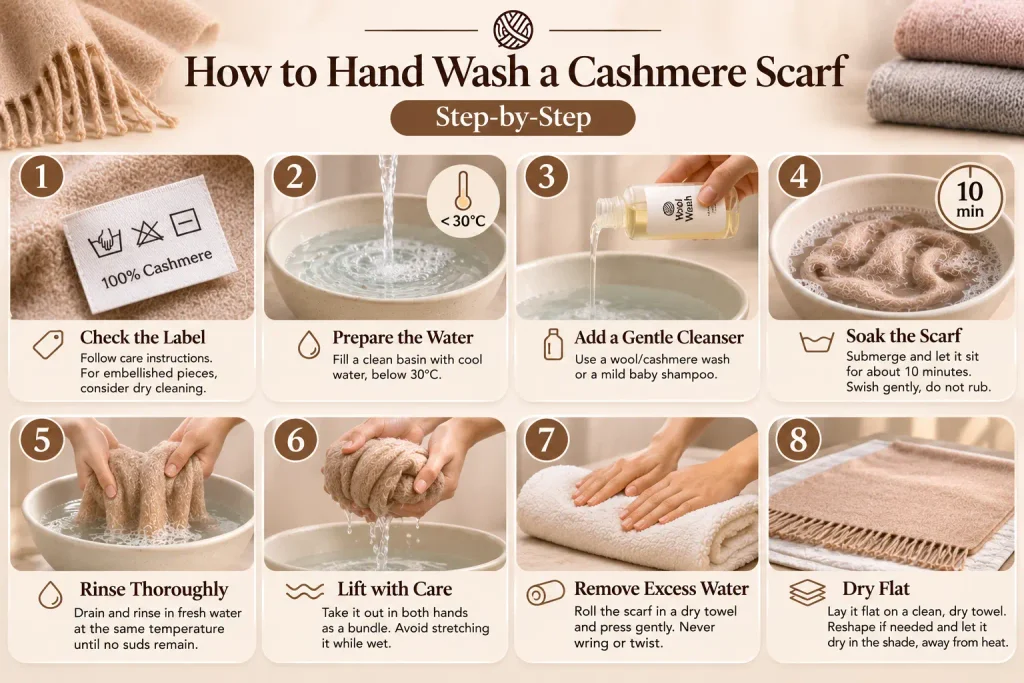
- Check the label. If it says the scarf is embroidered, hand-painted, or contains metallic yarn, skip ahead to the dry cleaning section.
- Fill a clean basin with cool to lukewarm water (below 30 °C).
- Add a capful of wool wash or a teaspoon of baby shampoo and mix until dissolved.
- Submerge the scarf and press it gently under the water so it soaks through evenly.
- Leave it for about 10 minutes. Swish lightly once or twice. Do not rub fabric against itself.
- Drain and rinse in fresh water at the same temperature. Repeat until no suds remain.
- Lift the scarf out in both hands as a bundle. Wet cashmere is heavy and stretches if it hangs.
- Roll it inside a dry towel and press firmly to remove water. Never wring or twist.
If the scarf has a dark or bright print, wash it alone for the first few washes, since loose dye can transfer. More on that in why printed scarves fade.
Can You Machine Wash a Cashmere Scarf?
Yes, with conditions. A proper wool cycle can be gentler than an impatient hand wash. Machine washing is reasonable when all of these are true:
- The care label allows machine washing
- A dedicated wool or hand wash programme is selected
- Water is cold or 30°C at most, with spin at 600 rpm or lower
- The scarf is inside a mesh laundry bag, washed alone or with other delicates
Skip the machine for scarves with long fringes or tassels, which tangle and stretch.
When to Choose Dry Cleaning Instead
A specialist dry cleaner is the safer option for:
- Hand-embroidered shawls, such as sozni work, where threads may bleed or pucker
- Kani woven or jacquard pieces with many colours woven into the pattern
- Hand-painted or block-printed scarves with unstable surface colour
- Scarves with metallic, zari or sequin details
- Oily or heavy stains, such as cooking oil, makeup, or red wine
Frequent dry cleaning also dries out the fibre, so keep it for pieces that truly need it.
Fibre Care Comparison: Cashmere vs Pashmina vs Other Scarf Fabrics
| Fibre | Water temperature | Detergent | Machine wash? | Drying | Ironing |
| Cashmere | Cool, below 30°C | pH-neutral wool wash | Wool cycle only, low spin | Flat, in shade | Steam, or wool setting on reverse |
| Pashmina | Cool, below 30°C | Wool wash or baby shampoo | Avoid; hand wash or dry clean | Flat, in shade | Steam only, light pressure |
| Merino wool | Cool to 30°C | Wool wash | Wool cycle, low spin | Flat | Wool setting with press cloth |
| Silk | Cold | Silk or delicate wash | Avoid for printed silk | Flat or hung, in shade | Low heat on reverse |
| Viscose and modal | Cold to 30°C | Mild delicate wash | Delicate cycle in a bag | Flat or hung | Medium heat on reverse |
| Wool and cashmere blends | Cool, below 30°C | Wool wash | Wool cycle, low spin | Flat | Wool setting with press cloth |
Pashmina is very fine Himalayan cashmere, often handwoven, so it needs the gentlest handling of all.
Drying, Ironing and Reshaping a Cashmere Scarf
Wet cashmere is weak and heavy, and it stretches under its own weight.
- Lay it flat on a dry towel or a mesh drying rack
- Reshape it while damp, smoothing edges and straightening the fringe with your fingers
- Keep it away from heat, including radiators, heaters, hair dryers, and strong sun
- Never tumble dry, as the heat and tumbling combine every felting trigger at once
Once dry, a light steam usually removes creases. If ironing is needed, use the wool setting, work on the reverse side, and place a thin cotton cloth between the iron and the scarf.
Why Pilling Is Not a Sign of Fake Cashmere
Pilling worries many buyers into thinking they bought a fake, but genuine cashmere pills too. Pills form when short fibres work loose at friction points, such as a coat collar or bag strap, and roll into tiny knots.
- New scarves pill most in the first few wears, then settle down
- Shorter fibres and looser yarns pill more, which is one reason very cheap cashmere pills heavily
- Friction zones pill first, so pills cluster at the neck and edges
- Synthetic blends pill too, and their pills tend to cling and resist removal
Remove pills with a cashmere comb or a fabric shaver, using light strokes in one direction. Never pull them off by hand. To judge authenticity, the checks in how to identify genuine cashmere scarves are far more reliable than pilling.
How to Rescue a Cashmere Scarf That Has Shrunk
Mild shrinkage can sometimes be partly reversed. Real felting cannot.
- Soak the scarf for 30 minutes in lukewarm water with a tablespoon of hair conditioner, which relaxes the fibre
- Press out the water with a towel without rinsing
- Gently stretch the scarf back towards its original size, a little at a time
- Dry it flat, pinning the edges to a towel if needed
If the fabric has turned thick, stiff and matted, the fibres have locked together, and the original drape will not return.
Storing Cashmere Between Seasons
Clothes moth larvae feed on animal fibre and are drawn to body oils and food traces, so clean scarves are far less attractive to them.
- Wash or clean every scarf before putting it away
- Fold, never hang, to prevent stretching at the shoulders of the fold
- Store in breathable cotton bags, not sealed plastic, which traps moisture
- Add cedar blocks or lavender sachets as natural moth deterrents
What Manufacturers Do Before a Scarf Reaches You
How well a scarf survives washing is partly decided at the factory. Yarn is scoured to remove grease, and woven fabric is finished with a controlled wash and gentle milling to set its handfeel. A well-finished scarf is more stable in water because much of its relaxation has already happened under control.
An experienced Scarf Manufacturer India buyer will also set care labels based on the actual fibre, weave and dye of each style. That is why winter woven scarves in plain cashmere may carry a hand wash label, while winter printed scarves with rich colour often call for extra caution.
The same care principles apply to larger cashmere and wool pieces. A cashmere throw from a Throws Manufacturer India brands trust, or a soft wool piece from the ruanas and capes range, needs the same cool water, gentle handling and flat drying, just with a bigger towel.
Conclusion

Cashmere is not fragile so much as particular. Heat, moisture, and friction cause the damage, so wash rarely, keep water cool, press rather than wring, and dry flat in the shade. Treated this way, a good cashmere scarf grows softer with age and lasts for decades.
Frequently Asked Questions
Can you wash a cashmere scarf at home?
Yes. Most cashmere scarves wash safely at home by hand in cool water with a pH-neutral wool wash. Embroidered, kani woven, or hand-painted pieces are safer with a specialist dry cleaner.
What water temperature is safe for cashmere?
Keep water cool to lukewarm, below 30°C, for both washing and rinsing. Hot water swells the fibre and lifts its scales, which, combined with movement, causes shrinking and permanent felting.
Can I use shampoo to wash cashmere?
Yes. A mild baby shampoo works well because cashmere is a hair fibre. Avoid regular laundry detergents with enzymes or bleach, which slowly weaken the protein structure of the scarf.
How often should a cashmere scarf be washed?
Wash it after roughly five to six wears in heavy use, and always before seasonal storage. Airing it out between wears and spot cleaning small marks keeps washing to a minimum.
Can you put a cashmere scarf in the washing machine?
Only on a dedicated wool or hand wash cycle, in cold water, with a spin of 600 rpm or lower. Use a mesh laundry bag and never wash it with heavy items.
Does pilling mean my cashmere is fake?
No. Genuine cashmere pills too, especially during the first few wears and at friction points like the neck. Pilling reflects fibre length and yarn twist, not whether the scarf is real cashmere.
How do I remove pills from a cashmere scarf?
Use a cashmere comb or fabric shaver with light strokes in one direction while the scarf lies flat. Never pull pills off by hand, as this drags more fibre loose.
How should I dry a cashmere scarf?
Roll it in a dry towel to press out water, then lay it flat on a towel or rack in the shade. Reshape while damp and never tumble dry or hang it.
Can a shrunken cashmere scarf be fixed?
Mild shrinkage can often be eased by soaking in lukewarm water with hair conditioner, then gently stretching and drying flat. Fully felted cashmere cannot be restored to its original size.
How do I store cashmere to prevent moths?
Clean the scarf first, fold it into a breathable cotton bag, and add cedar blocks or lavender sachets. Check it every month or two, since moths target soiled, undisturbed animal fibres.