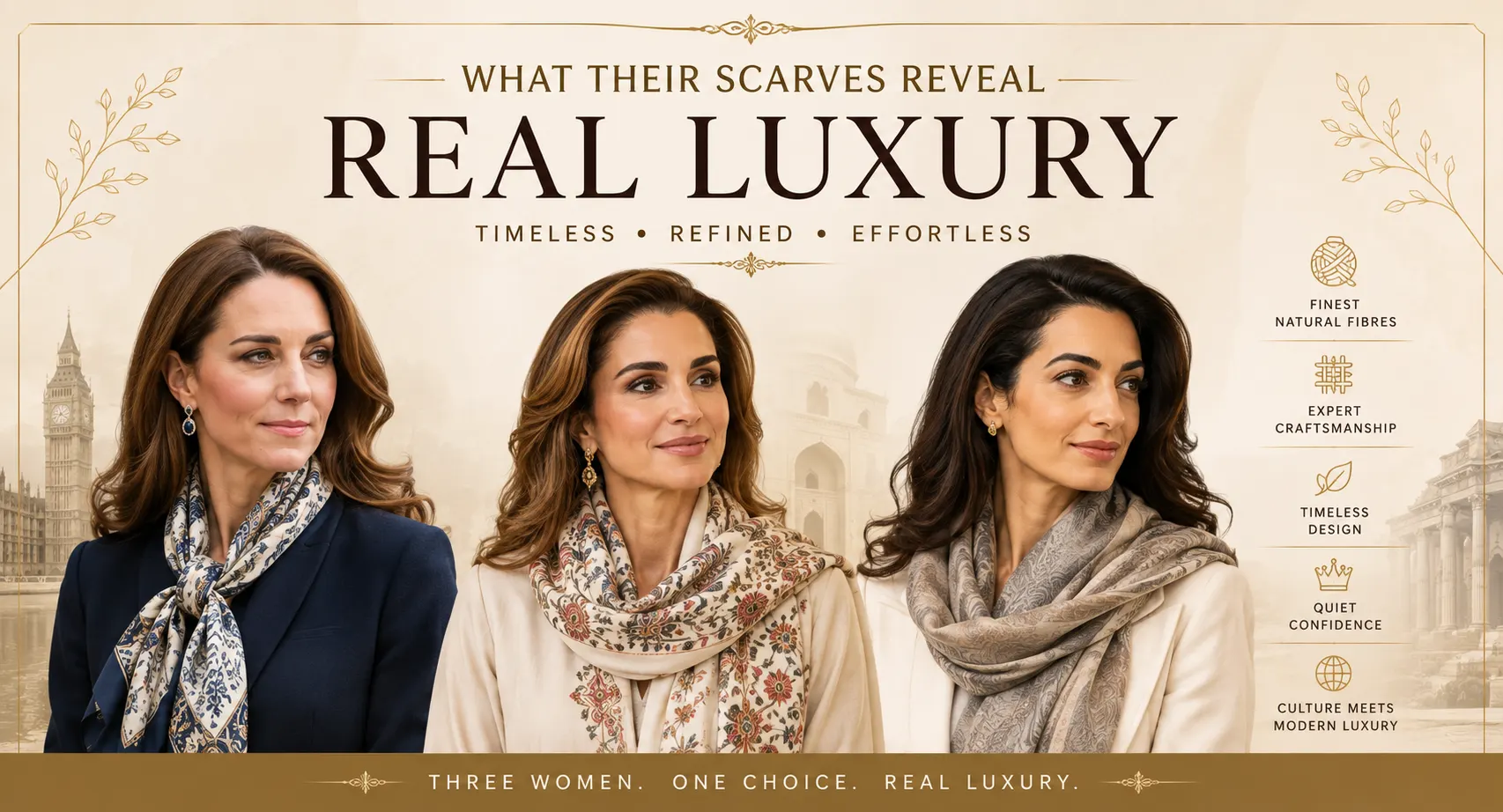
At first glance, they are three very different women. A British royal from Berkshire, a Jordanian queen born in Kuwait, and an internationally celebrated human rights lawyer with a global travel calendar. Their public roles, cultural contexts, and daily wardrobes reflect very different lives.
Look closer at what they wear around their necks, however, and a shared vocabulary emerges. The way Kate Middleton, Queen Rania of Jordan, and Amal Clooney choose their scarves says something quiet and consistent about what real luxury actually looks like today: not the loudest logo, not the freshest trend, but a very particular kind of quality that most consumers have been taught to overlook.
At Bright Star, we manufacture silk scarves, cashmere shawls, and stoles for premium brands globally, and the shift in what buyers are asking for now closely mirrors what these three women have been wearing for years. This is what their choices reveal.
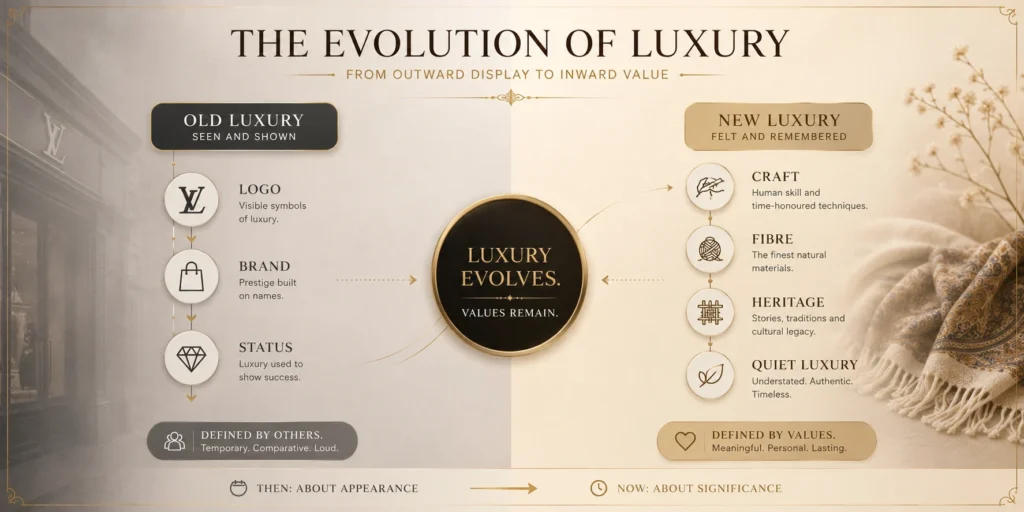
The Common Thread They All Signal Without Saying It
None of these women dresses to shock. All three appear repeatedly in the same or similar scarves across years of public appearances. All three favour fibres and prints that photograph as tactile and expensive without shouting a designer’s name.
That shared instinct points to a truth most luxury marketing avoids. Real luxury is not about the brand. It is about the fibre, the weave, the print method, and the finish. A high-momme silk twill or a long-fibre cashmere piece is quietly recognisable to anyone who understands textiles, regardless of the label.
This is why the “quiet luxury” trend has moved from a niche editorial idea to a mainstream shift in how premium consumers shop. Buyers who might once have chased the latest logo bag are now asking about fibre origin, weaving technique, and hem finish. The three women above have been doing this for years. The rest of the market is finally catching up.
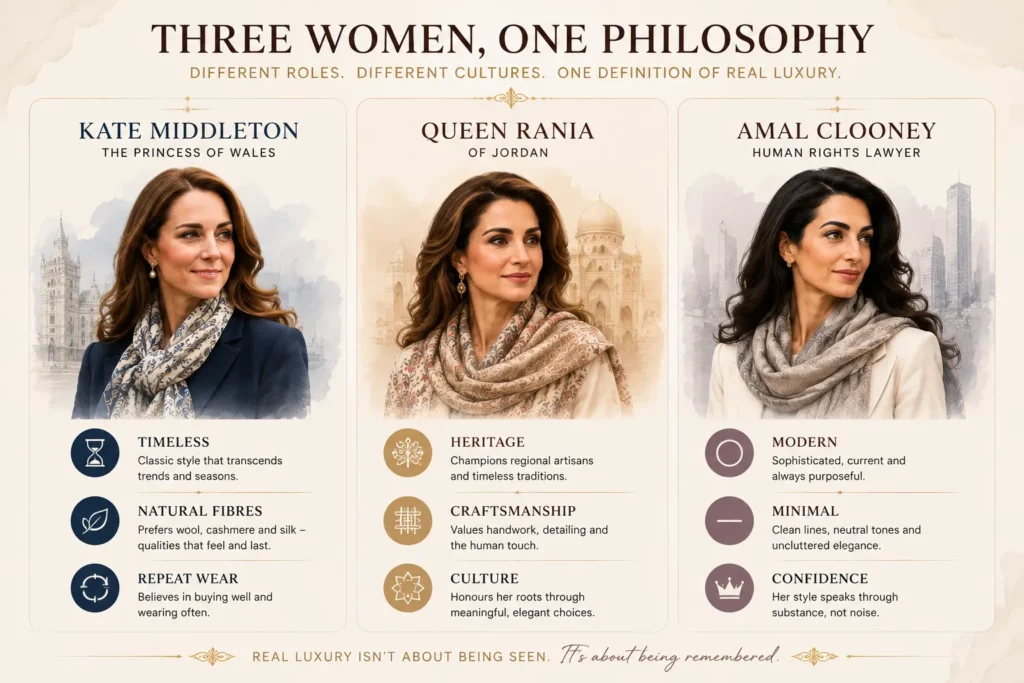
Kate Middleton: The Case for Restrained British Elegance
The Princess of Wales has built a globally admired wardrobe on one clear principle: buy well, and wear it often. Her scarves and shawls follow the same logic. She is repeatedly photographed in the same wool wraps during outdoor royal engagements, and in tasteful silk scarves, tied simply, at daytime events.
Her choices reveal three things:
- Preference for natural fibres: wool, cashmere, and silk over synthetics
- Restrained prints: florals, tartans, and small motifs rather than logo-heavy patterns
- Longevity of use: pieces returning across seasons rather than one-off appearances
The Kate Middleton effect on retail is well-documented. When she wears a piece, it sells out. The pieces that sell out most reliably are almost always the ones made in fibres and finishes that hold up over time. That is not a coincidence.
Queen Rania of Jordan: Cultural Integration and Craftsmanship
Queen Rania has become internationally recognised for the way she pairs Jordanian and Middle Eastern craftsmanship with international luxury. Her scarves and shawls appear in a wide range of contexts, from state visits to humanitarian work, and consistently signal an appreciation for handmade textiles.
Her choices highlight:
- Support for regional artisans: pieces sourced from Jordanian and regional weavers
- Mixing of luxury and heritage: high-end silk and cashmere paired with traditional embroidery
- Cultural respect through fabric: warmth, coverage, and modesty carried through beautiful materials
Her approach reframes luxury as something you support rather than simply consume. A hand-embroidered pashmina or a hand-loomed cashmere stole tells a longer, deeper story than a logo scarf ever could.
Amal Clooney: Statement Luxury Without Loudness
Amal Clooney’s wardrobe reads as architectural. Sharp lines, sculptural silhouettes, and confident colour choices. Her scarves fit this aesthetic perfectly. She is widely photographed in oversized cashmere wraps for long-haul travel, structured silk squares for daytime events, and heavier stoles thrown over tailored coats.
The consistency in her choices reveals:
- Texture as the statement: bold weaves, dense cashmere, and structured silk twill
- Neutral or single-colour bases: allowing the fibre and finish to do the talking
- Practicality without compromise: pieces that work on a plane, in a courtroom, and at a gala
Her scarves are not accessories in the decorative sense. They are functional pieces of a highly considered wardrobe, where the material is the point.
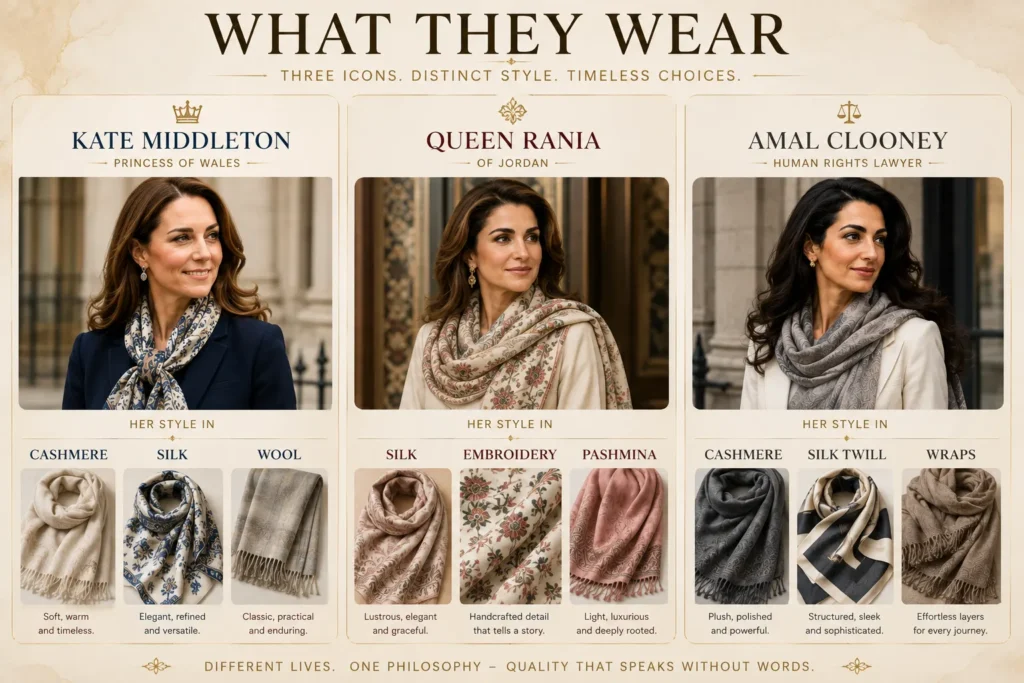
The Five Principles of Real Luxury: Their Scarves Reveal
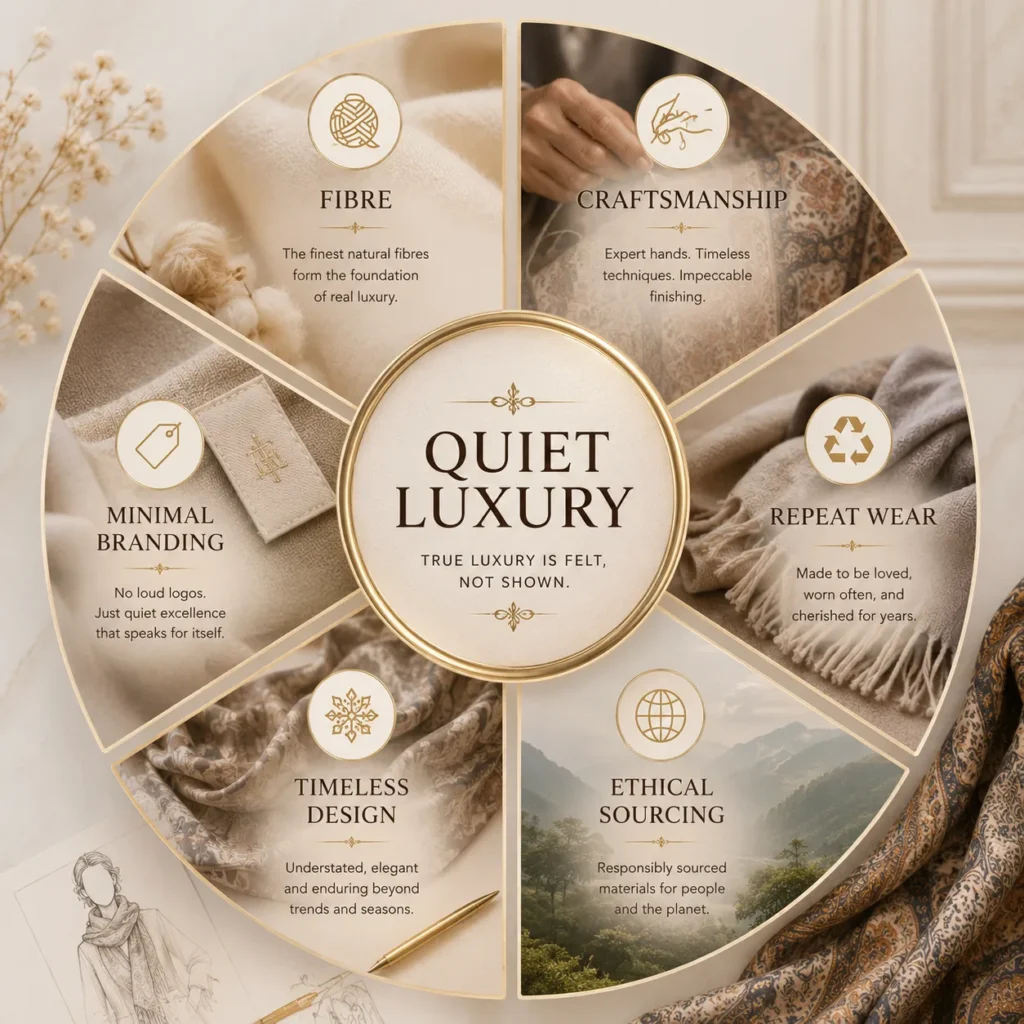
Taken together, the scarves worn by all three women reveal five principles that define real luxury today. These principles are also the ones B2B buyers, retailers, and private label brands should apply when sourcing their own collections.
1. Fibre Quality Over Brand Recognition
Long-fibre cashmere (36 mm and above) and high-momme silk twill (14 to 19 momme) are the actual markers of luxury. The brand name is secondary to what the fibre can do.
2. Restraint Over Spectacle
None of these three women wears anything designed purely for social media impact. Restraint reads as confidence, and confidence reads as luxury.
3. Craftsmanship Over Mass Production
Hand-rolled hems, hand-block prints, and hand-loomed weaves each take time, and each is visible in the way a piece falls, catches light, and holds up over years of wear.
4. Repeat Wearing as a Statement
Wearing the same piece across years is a public signal that it was worth buying in the first place. Disposable luxury is a contradiction in terms.
5. Cultural and Ethical Sourcing
Where a piece is made, and by whom, is now part of what makes it luxurious. Traceable origin and ethical production have moved from nice-to-have to essential.
What This Means for Buyers Building a Luxury Scarf Collection
Here is a quick reference for what real luxury scarves and shawls should include, based on the standards these three wardrobes consistently reflect.
| Feature | Real Luxury Standard |
| Silk grade | 14 to 19 momme silk twill |
| Cashmere fibre length | 36 mm or more |
| Cashmere fibre diameter | 14.5 microns or less |
| Print technique | Screen printing or hand-block |
| Hem finish | Hand-rolled |
| Origin transparency | Documented country and mill |
| Design longevity | Classic prints, non-seasonal |
| Ethical sourcing | Verified supply chain |
If a scarf checks most of these boxes, it belongs in the same conversation as the pieces worn by Kate Middleton, Queen Rania, and Amal Clooney.
Where Real Luxury Silk and Cashmere Actually Come From
Many of the world’s most expensive silk and cashmere scarves are manufactured in India. The country has been a global centre for silk weaving, block printing, hand-embroidery, and cashmere finishing for centuries. Kashmir alone gives its name to the fibre most associated with quiet luxury, and the region’s mills continue to supply premium brands worldwide.
Indian craftsmanship covers almost every technique visible in the scarves worn by our three examples. Handloom weaving in Varanasi, hand-block printing in Rajasthan, pashmina spinning in Kashmir, and silk screen printing in Bangalore all remain living traditions, not museum pieces. Many of the pieces sold in European boutiques at four-figure retail prices are woven, printed, and finished in Indian mills that also produce for wholesale buyers directly.
This is where Bright Star sits in the picture. We have been manufacturing scarves, shawls, and stoles from India since 1950, supplying premium retailers, private label brands, and boutique importers across Europe, North America, Australia, and the Middle East. The same quality standards that define the pieces worn by Kate Middleton, Queen Rania, and Amal Clooney are directly available to buyers who source at the manufacturing level.
For Brands: Building a Collection at This Level
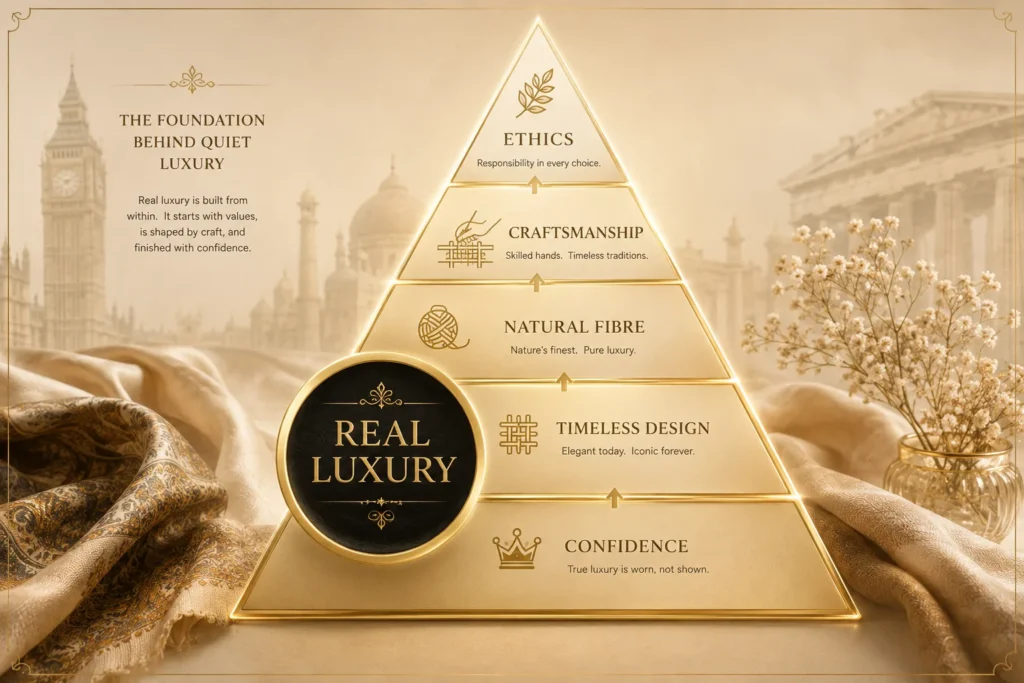
If you are building a scarf or shawl line that wants to compete at the quiet-luxury level, the specifications matter more than the marketing. Bright Star supports:
- Long-fibre cashmere sourcing with documented origin and micron count
- Silk twill from 12 to 19 momme for every retail tier
- Hand-rolled hems and screen printing for premium collections
- Hand-block prints and traditional embroidery available on request
- Full traceability on fibre, mill, and production location
- Flexible minimums from 500 pieces upwards for boutique brands
Explore the full range on our stoles manufacturing page and companion collections in shawls, throws, and cushion covers.
Ready to Build a Collection at Quiet-Luxury Standards?
The scarves worn by Kate Middleton, Queen Rania, and Amal Clooney are recognisable to the trained eye, and they share a common vocabulary of fibre, finish, and restraint. The good news is that these standards are available to any brand or retailer willing to source at the manufacturing level rather than the retail one.
Explore Bright Star’s silk, cashmere, and pashmina range at bright-star.co.in or reach out for a wholesale quote tailored to your next luxury collection.
Frequently Asked Questions
What kind of scarves does Kate Middleton typically wear?
Kate Middleton is widely photographed in wool wraps, cashmere shawls, and silk scarves featuring restrained prints. Her preference for repeat-worn natural-fibre pieces reflects a classic British approach to understated luxury dressing.
What makes Queen Rania’s scarf choices notable?
Queen Rania is known for pairing international luxury silk and cashmere with pieces from Jordanian and regional artisans. Her scarves consistently highlight handmade craftsmanship, cultural heritage, and thoughtful integration of tradition with modern tailoring.
Why does Amal Clooney favour cashmere and silk scarves?
Amal Clooney is often seen in oversized cashmere wraps and structured silk squares. These fabrics suit her frequent international travel and sculptural style, prioritising warmth, drape, and texture over decorative embellishment.
What is quiet luxury in scarves?
Quiet luxury in scarves refers to pieces with premium fibres, hand-finishing, and understated design that avoid visible logos. The focus shifts from brand recognition to fibre grade, craftsmanship, and long-term wearability instead.
How can I tell if a scarf is a real luxury?
Real luxury scarves use long-fibre cashmere or high-momme silk twill, feature hand-rolled hems, and come with clear origin documentation. Feel, drape, and warmth reveal quality even before the label confirms it.
Do all three of these women wear the same brands?
No, all three favour different designers and regions. What unites their scarf choices is not a single brand but a shared preference for premium fibres, refined finishing, and pieces worth wearing repeatedly over the years.
Is Indian-made silk considered luxury?
Yes, Indian-made silk is considered a luxury in premium global markets. India has centuries of silk weaving and printing craftsmanship, and many high-end European brands source their silk scarves and stoles from Indian manufacturers.
What silk grade do luxury brands typically use?
Luxury silk scarf brands typically use silk twill in the 14 to 19 momme range. This weight balances drape, print clarity, and durability, and is considered the benchmark for luxury silk scarves worldwide.
Can Bright Star manufacture quiet-luxury scarves for my brand?
Yes, Bright Star specialises in producing premium silk and cashmere scarves at quiet-luxury standards. Buyers receive full documentation on fibre grade, hand-finishing options, and origin traceability for every custom order placed.
What is the minimum order for luxury scarves at Bright Star?
Minimum orders at Bright Star are flexible for genuine buyers, typically starting from around 500 pieces. Boutique brands and larger retailers both receive matched production timelines and quality control on every order.